
Chimney Exterior Repair
A chimney penetrating a roof or exterior wall creates one of the more complex flashing details on a house, with step flashing, counter-flashing, and a cricket (on wider chimneys) all working together to shed water around it. When any one of those fails, water tends to travel down the chimney chase and show up as rot in the framing or siding well below the roofline.
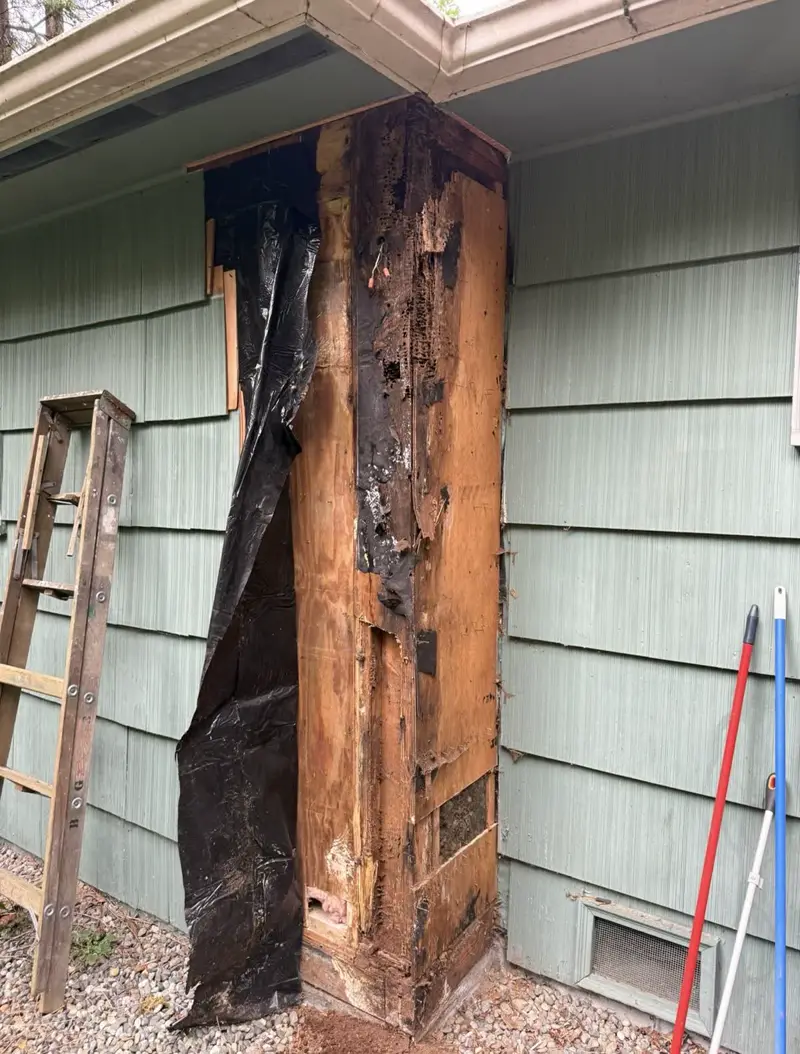 Before
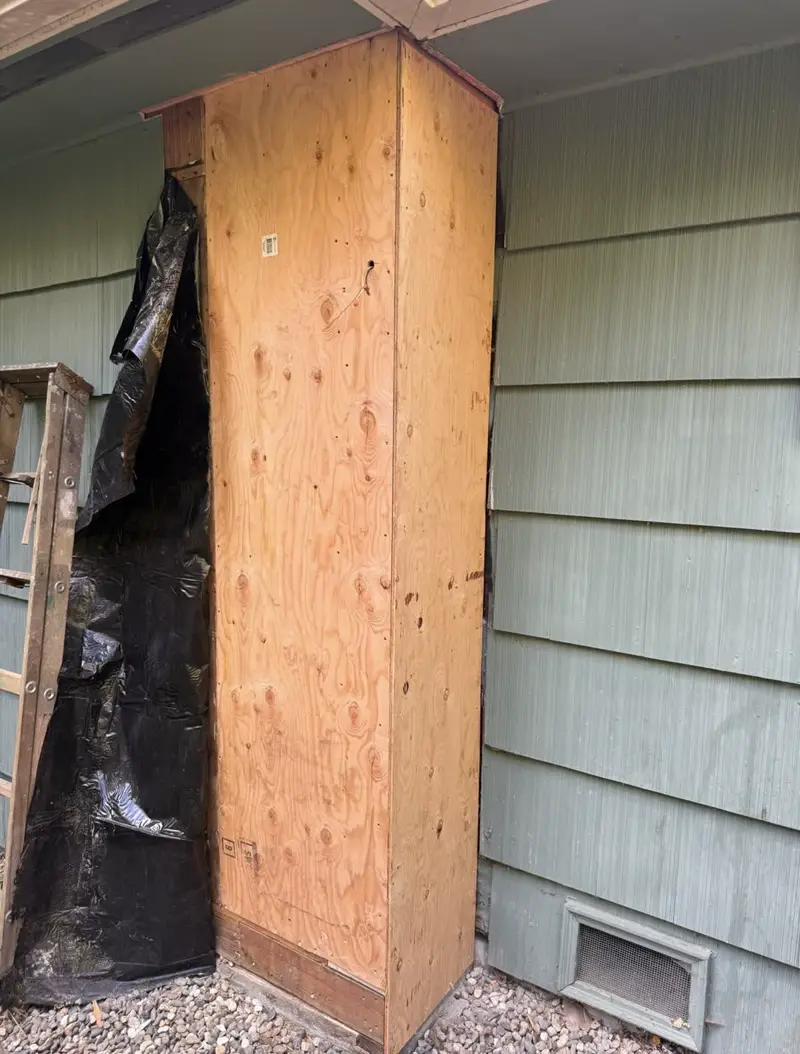 After
AfterRotted chimney chase framing replaced
Understanding chimney exterior repair in older and newer homes
A chimney passing through a roof or exterior wall creates one of the most complicated flashing assemblies on a house, combining step flashing along the roof slope, counter-flashing set into the chimney itself, and — on wider chimneys — a cricket built to divert water around the uphill side instead of letting it pool. Any single piece of that system failing sends water down the chimney chase, where it can travel well below the roofline before it shows up as staining or soft siding, or as an interior ceiling stain nowhere near where the actual leak is. Wood-framed chimney chases add another vulnerable seam where the siding meets the structure, and that transition is frequently sealed with caulking rather than the flashing detail it actually needs. Because so much of a chimney's water management happens where you can't see it, we inspect the full flashing system together rather than patching whichever piece happens to be visible from the ground.
Signs you may need chimney exterior repair
Most homeowners notice one of these first. On their own they can look minor — together, they usually mean water has been getting in longer than it looks.
Staining or streaking on siding below where the chimney meets the roof usually means step flashing or counter-flashing at that intersection has failed and is letting water run down the wall.
Soft or discolored siding on the chimney chase itself often points to a failed siding-to-chase transition at the base, where caulking was used in place of proper flashing.
Interior ceiling or wall staining near where the chimney passes through the roof or wall means water has already tracked well past the exterior flashing system before becoming visible indoors.
Visible gaps or rusted flashing at the chimney-to-roof intersection are a direct sign that the step flashing or counter-flashing system is no longer sealing that transition.
Efflorescence, the white mineral staining that appears on masonry chimneys, forms as water moves through the masonry and evaporates, and its presence usually means moisture is getting into the chimney structure itself.
What causes chimney exterior repair to fail
Root cause
Chimney flashing failures typically come from step flashing that wasn't properly integrated with roofing material, a missing cricket on a chimney wider than about 30 inches (which lets water pool against the uphill side), or a wood-framed chimney chase where the siding transition at the base was sealed with caulking instead of proper flashing.
How we diagnose it
We inspect the chimney-to-roof and chimney-to-wall transitions, check the chase siding for soft spots, and trace any interior staining back to the likely exterior source before recommending a repair.
How we repair it
Inspect the flashing system
We check step flashing, counter-flashing, and cricket condition (where applicable) at the chimney-to-roof intersection.
Assess the chase and siding
For wood-framed chimney chases, we check siding and sheathing condition around the full perimeter.
Correct flashing and repair damage
Failed flashing is replaced and any decayed framing or siding is repaired before closing the assembly back up.
Finish and verify
Siding is matched and finished, and we verify the repair sheds water correctly before calling the job complete.
Recent chimney exterior repair projects
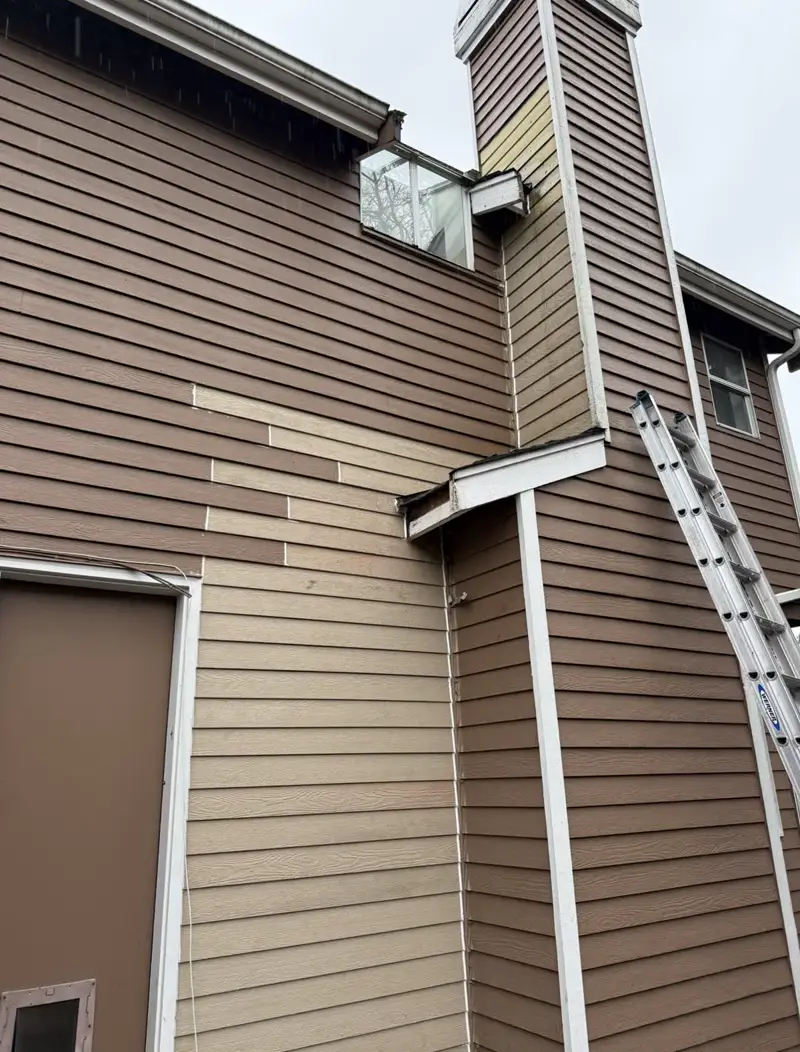
Every chimney exterior repair job includes
A written scope before we start, and every one of these as standard — not billed as extras once we're already on site.
A full inspection of the chimney flashing system and chase, checking the roof-to-chimney intersection and the siding transition together.
Correction of step flashing, counter-flashing, or a missing cricket as needed, matched to what the specific chimney and roof pitch require.
Repair of any decayed chase framing or siding found once the affected area is opened up.
Siding matched to the rest of the chase and surrounding wall so the repaired section doesn't stand out.
Documentation of what failed and what was corrected, so you have a clear record of the flashing work performed.
A 24-month workmanship warranty on the flashing and wood repair performed around the chimney.
Chimney Exterior Repair before & after
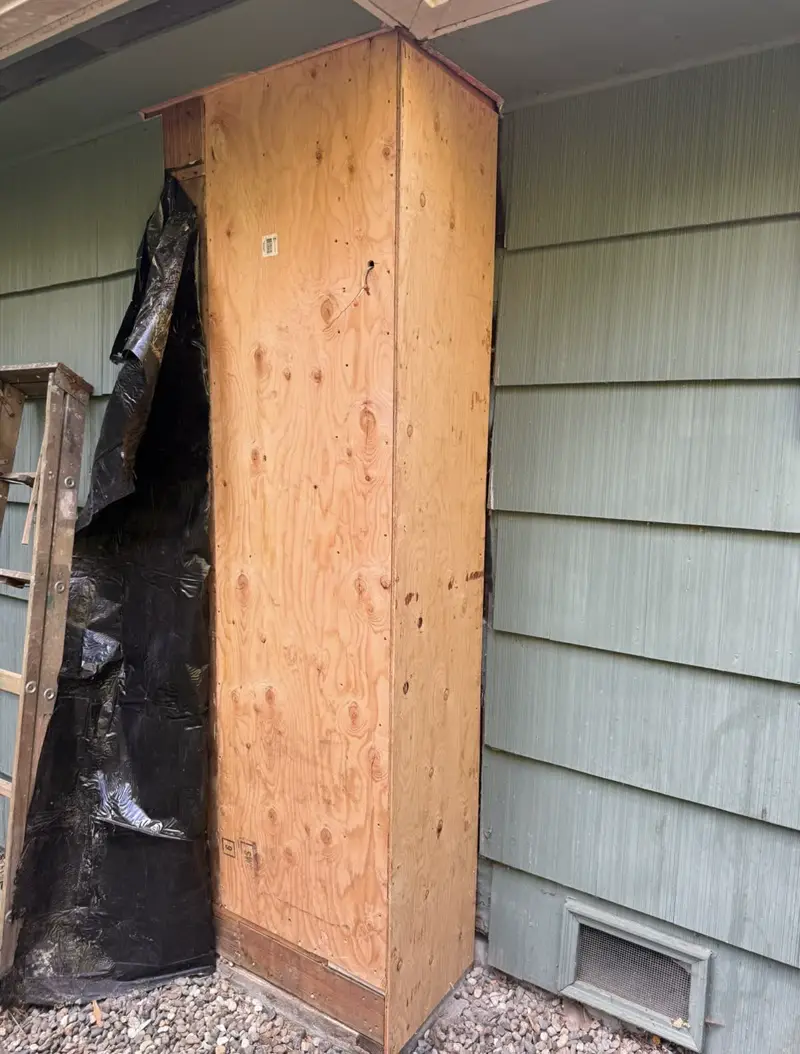
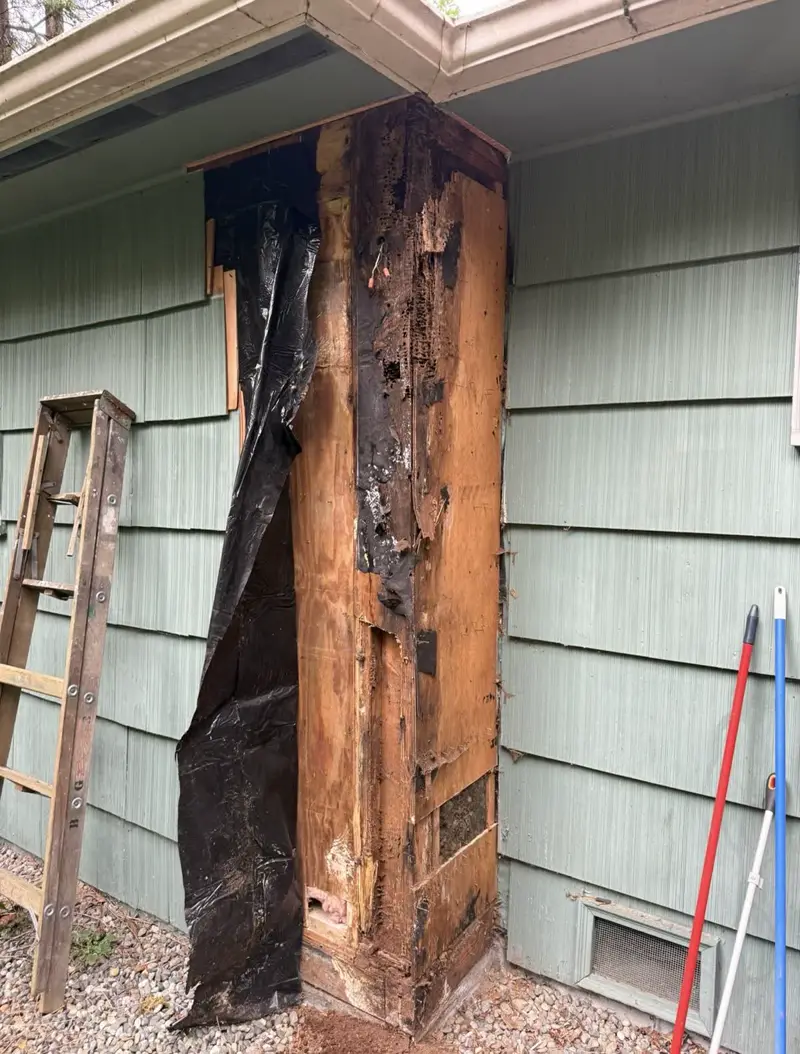
BeforeAfterChase opened, then re-sheathed
Backed by our 24-Month Workmanship Warranty
2 years on repairs; ask about coverage on new installs. Every chimney exterior repair project includes a written scope before work begins and photo documentation of what was found and repaired.
Chimney Repair in the Puget Sound area: what you should know
Many homes in the Puget Sound area have wood-framed chimney chases, boxes framed and sided like the house around a metal flue. The top of the chase is closed with a metal cover. When that cover is flat or rusted, it holds water, and the chase framing rots from the top down.
What causes it
Flat or sagging chase covers
Galvanized covers rust and hold water instead of shedding it.
Missing storm collar
Water runs down the flue pipe into the chase.
Poor roof-to-chase flashing
Step flashing and counter flashing at the roof line fail and leak into the chase.
Siding without clearance at the roof
Chase siding that touches the roof soaks up water.
What our chimney chase repair includes
- Inspection of cover, flashing, siding and framing
- Removal of damaged siding, sheathing and framing
- New studs, top plates and blocking
- New sheathing and weather barrier
- Step and counter flashing at the roof line
- New siding and trim matched to the house
- Sloped stainless chase cover with drip edge and storm collar
How to prevent it
- Look for rust streaks on chase siding
- Replace flat galvanized covers with sloped stainless ones
- Make sure the storm collar is sealed at the flue
- Have roof flashing checked when the roof is replaced
- Keep chase siding painted
What affects the cost
Replacing a chase cover alone is a modest job. When the framing at the top of the chase has rotted, the work includes scaffolding or roof access, framing, sheathing and siding, which adds up quickly. Catching a rusted cover early is far cheaper than rebuilding a chase.
How long it takes
A cover replacement usually takes a day. A chase rebuild with framing and siding takes three to seven days depending on height and roof access.
Why homeowners choose Goodbye Rot
We fix the cause, not just the surface. Every chimney chase repair job starts with a free on-site inspection, moisture readings and photos, and you get a written scope and price before work begins. We are licensed, bonded and insured in Washington, and our repairs carry a 24-month workmanship warranty.
Chimney Exterior Repair questions
Why is water showing up on my ceiling near the chimney?
What is a cricket and do I need one?
Do you repair masonry chimneys or only wood-framed chase enclosures?
Is this covered under your workmanship warranty?
You may also need
Waterproofing & Flashing
Flashing and drainage details that stop the next leak before it starts.
Waterproofing & Flashing detailsSiding Repair & Replacement
Cedar, composite, and lap siding matched to your home's existing look.
Siding Repair & Replacement detailsFascia & Soffit Repair
The roofline trim that hides gutter overflow damage until it's serious.
Fascia & Soffit Repair detailsChimney Exterior Repair by city
What we run into with chimney exterior repair shifts from one city to the next — lot, tree cover, and how close a house sits to water all change what we find.
Everett
Chimney Repair in EverettMarysville
Chimney Repair in MarysvilleLake Stevens
Chimney Repair in Lake StevensMill Creek
Chimney Repair in Mill CreekMukilteo
Chimney Repair in MukilteoSnohomish
Chimney Repair in SnohomishLynnwood
Chimney Repair in LynnwoodEdmonds
Chimney Repair in EdmondsMountlake Terrace
Chimney Repair in Mountlake TerraceArlington
Chimney Repair in ArlingtonStanwood
Chimney Repair in StanwoodWoodinville
Chimney Repair in WoodinvilleBothell
Chimney Repair in BothellKenmore
Chimney Repair in KenmoreLake Forest Park
Chimney Repair in Lake Forest ParkShoreline
Chimney Repair in ShorelineSeattle
Chimney Repair in SeattleKirkland
Chimney Repair in KirklandRedmond
Chimney Repair in RedmondBellevue
Chimney Repair in BellevueSammamish
Chimney Repair in SammamishMount Vernon
Chimney Repair in Mount VernonChimney Exterior Repair across our service area
Need chimney exterior repair? Tell us about it.
- Licensed, bonded & insured
- Free on-site estimates
- 24-month workmanship warranty
Get a free estimate for chimney exterior repair
We'll inspect the damage on-site, explain what caused it, and give you a clear written scope and price.