
Structural Wood Repair
When moisture intrusion goes unaddressed long enough, damage moves past siding and trim into the framing that actually carries the load of the house — studs, sill plates, and rim joists. This is the repair category we take most seriously, because covering damaged structural wood instead of properly repairing it is never an acceptable shortcut.
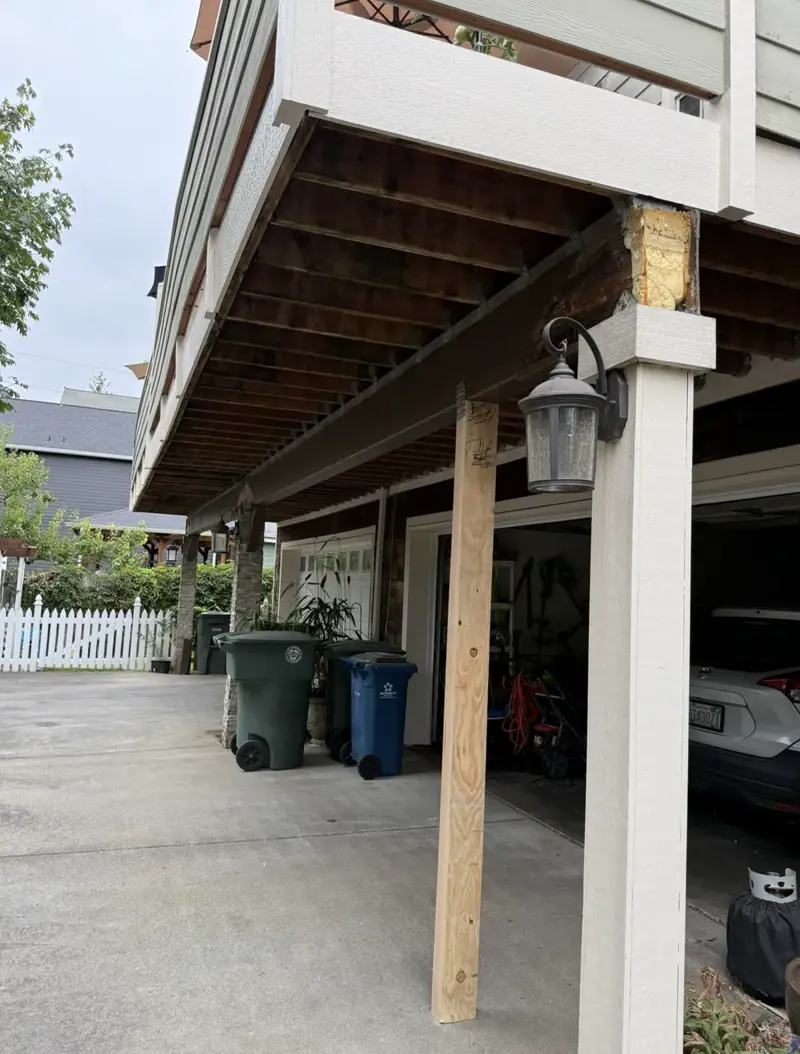 Before
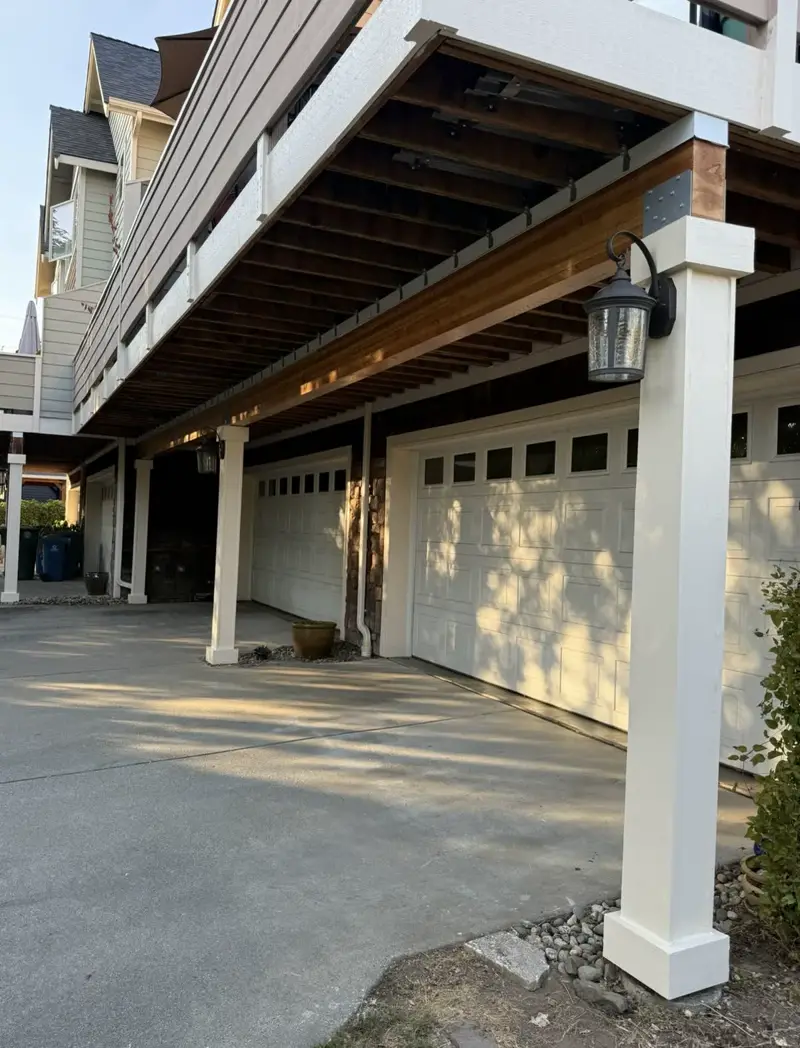 After
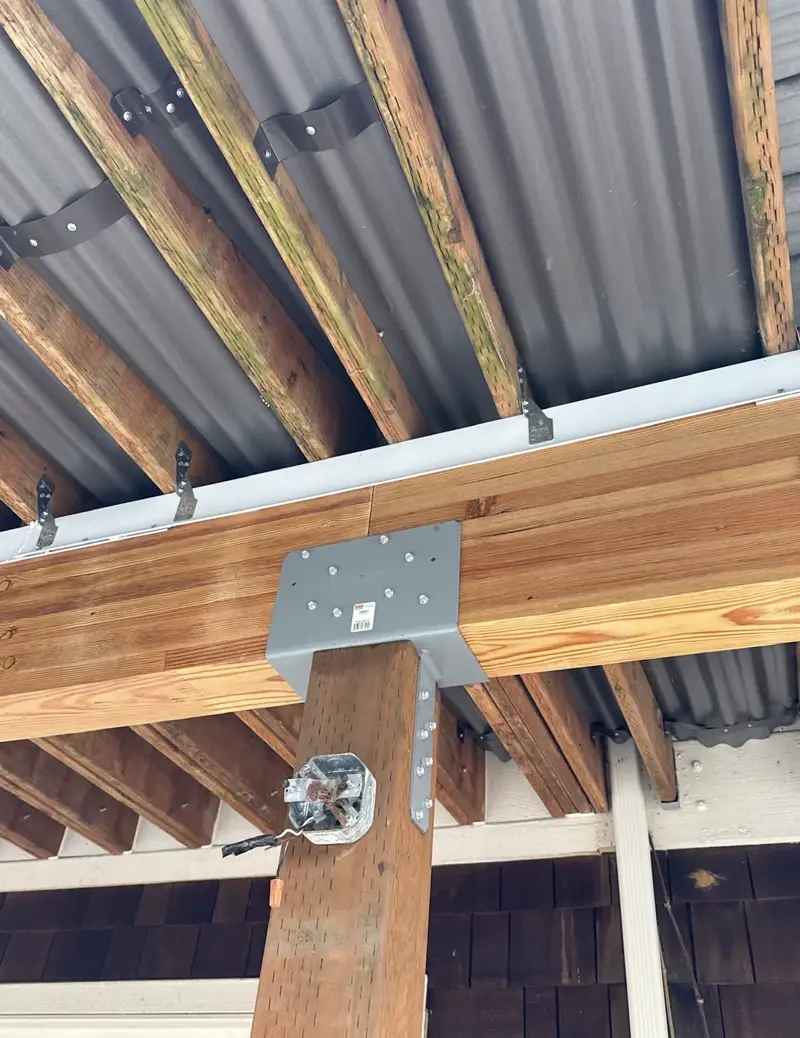
AfterPost rebuilt and wrapped
Understanding structural repairs in older and newer homes
Structural wood repair means the damage has moved past siding, trim, and finish surfaces into the framing that's actually carrying the weight of the house — studs, sill plates, and rim joists. This almost always happens because an earlier moisture problem, like a leaking window or a failed roof-to-wall flashing, was never corrected, so the same water kept finding the same framing member year after year until decay reached structural depth. Sill plates and rim joists are particularly vulnerable because they sit low on the wall, right where water naturally drains and collects, and they're rarely visible without opening the wall. Because these repairs involve load-bearing wood, we're deliberate and transparent about the inspection process — we don't treat opening a wall as a free, unlimited exploration, and we never cover a compromised structural member instead of properly replacing it.
Signs you may need structural repairs
Most homeowners notice one of these first. On their own they can look minor — together, they usually mean water has been getting in longer than it looks.
Visibly sagging or uneven wall or floor sections near an exterior wall usually mean a load-bearing member below has lost enough strength that it's no longer holding its shape.
Doors or windows that have started sticking or no longer close square often indicate the framing around them has shifted, which can point to structural decay rather than simple settling.
Soft, crumbling wood visible at a sill plate or rim joist is a priority sign, since both members carry the load of the wall above down to the foundation.
A wall that feels spongy when pressed near the base is frequently where the sill plate sits, and that softness usually means decay has already reached structural wood.
Long-term water staining on an interior wall that traces back to an exterior source suggests moisture has been reaching the framing for long enough to become a structural concern, not just a cosmetic one.
What causes structural repairs to fail
Root cause
Structural framing damage is almost always the end result of a moisture problem that was never corrected — a leaking window, a failed roof-to-wall flashing, or a sill plate sitting too close to grade without a proper capillary break. Sill plates and rim joists are especially vulnerable because they sit at the base of the wall, where water naturally collects.
How we diagnose it
Because structural repairs involve opening framing, we treat the inspection stage carefully: we explain what areas we need to open to confirm the extent of damage, what that involves, and what it costs, before any wall or floor assembly is opened. We do not treat destructive inspection as a free, unlimited service — the on-site visual estimate is free, and any exploratory opening is scoped and priced with you first.
How we repair it
Confirm the extent of damage
With your approval, we open the minimum area needed to see how far decay has traveled through the framing.
Temporary support where needed
If a load-bearing member is compromised, we shore the structure properly before removing any damaged material.
Replace compromised framing
Studs, sill plates, or rim joists are cut back to solid wood and replaced with new framing sized and fastened to code.
Correct the source and close up
The original moisture entry point is corrected before the wall is closed, and the area is documented with photos.
Recent structural wood repair projects
Every structural repairs job includes
A written scope before we start, and every one of these as standard — not billed as extras once we're already on site.
A scoped, priced exploratory opening when hidden damage needs to be confirmed, explained and approved by you before we open anything — never sold as a free, unlimited inspection.
Temporary shoring of load-bearing members wherever required, so the structure stays properly supported while compromised framing is removed.
Replacement of studs, sill plates, or rim joists cut back to solid wood and rebuilt to current code sizing and fastening.
Correction of the underlying moisture source before the wall is closed back up, so the new framing isn't exposed to the same failure.
Photo documentation of the framing before and after repair, so you have a clear record of what was found and what was replaced.
A 24-month workmanship warranty on all structural framing repair we perform.
Structural Repairs before & after
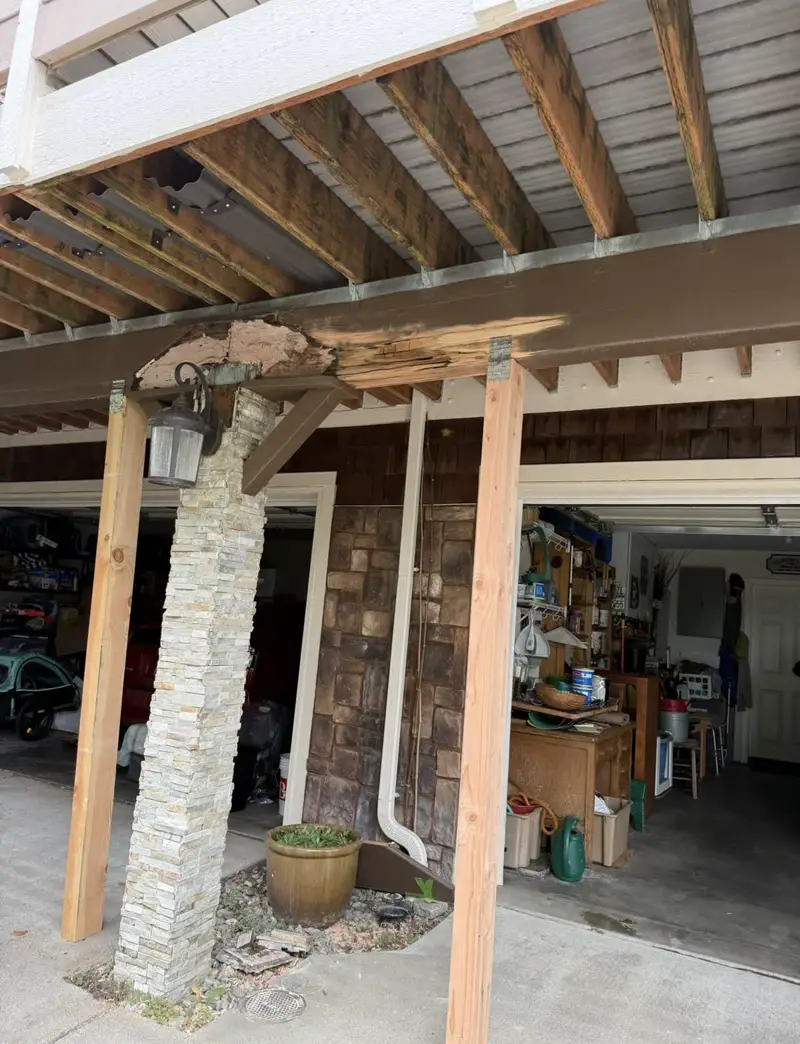
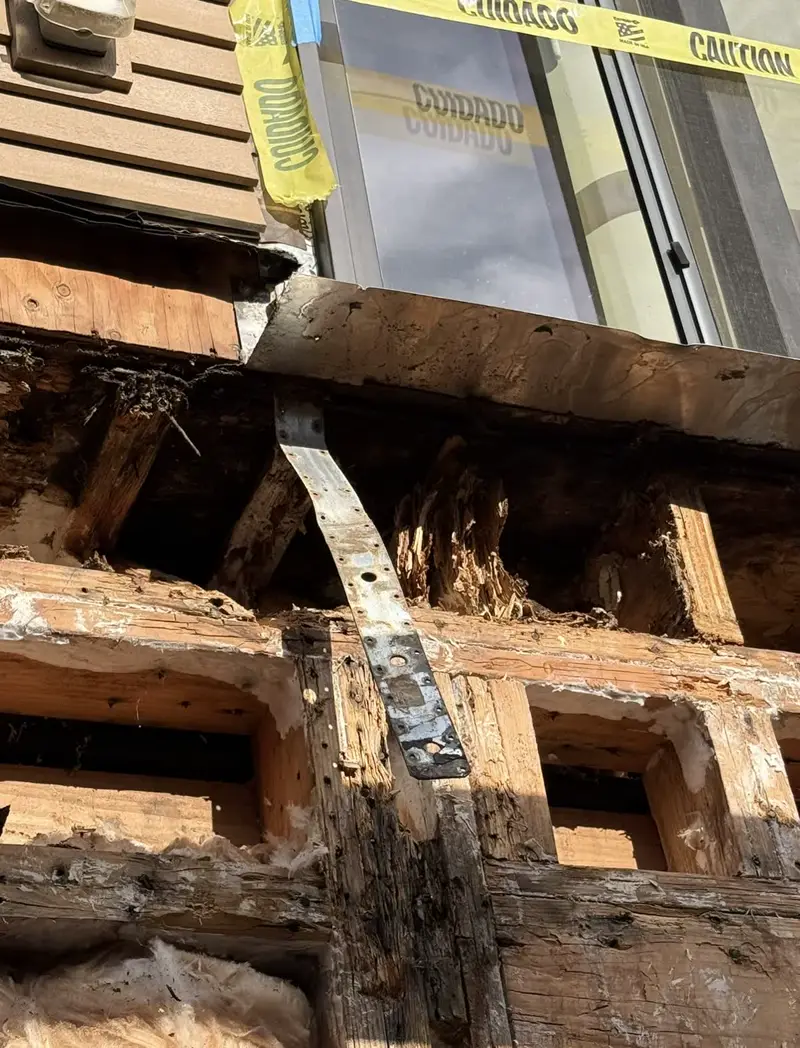 Before
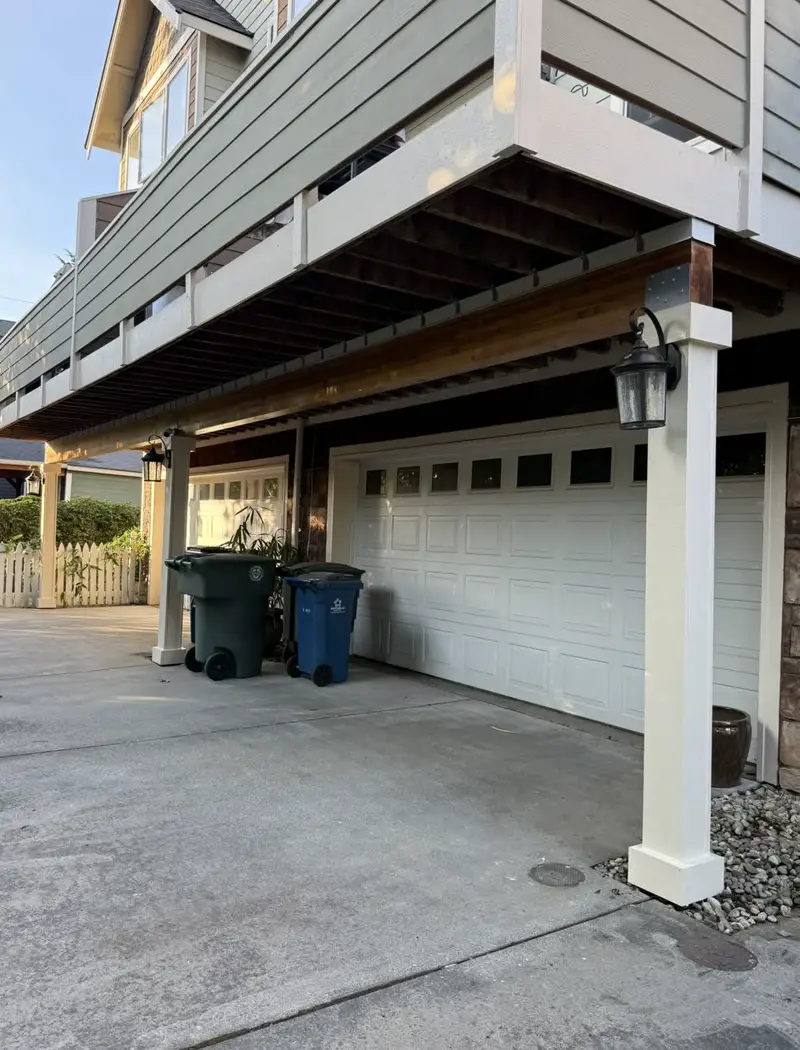
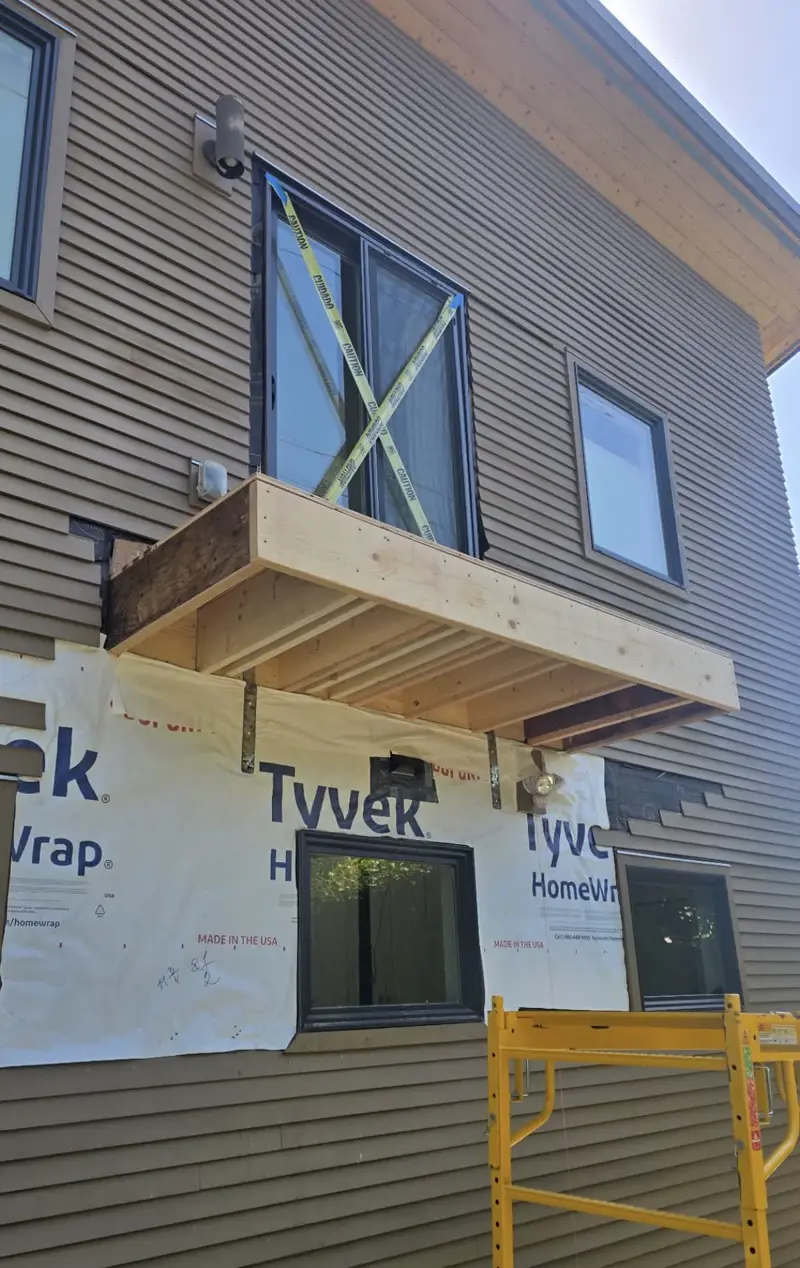 After
AfterBalcony framing replaced
Backed by our 24-Month Workmanship Warranty
2 years on repairs; ask about coverage on new installs. Every structural repairs project includes a written scope before work begins and photo documentation of what was found and repaired.
Structural Repairs in the Puget Sound area: what you should know
Structural rot affects the framing that holds the house up: studs, plates, sill plates, rim joists, posts and beams. In the Puget Sound area, most of the structural repairs we do start with water at the bottom of the house, from downspouts, grade sloping toward the wall, or old flashing at decks and porches.
What causes it
Downspouts emptying at the foundation
Roof water soaks the soil and splashes back onto the bottom of the wall, keeping sills and rim joists wet.
Grade sloping toward the house
Soil and pavers that slope toward the wall send water to the sill area every storm.
Deck and porch connections
Unflashed ledgers and porch beams drive water into the house framing.
Long-term leaks above
A leak at a window or roof line can run down inside the wall for years and rot the plates at the bottom.
What our structural repair includes
- Inspection of framing, sills and rim joists, with moisture readings
- Temporary shoring before any framing is removed
- Replacement of rotted sills, rim joists, plates, studs, posts or beams
- Treated lumber and sill gasket where wood meets concrete
- Engineering when members need to be resized
- New sheathing, barrier, siding and trim to close up
- Fixing the water source: downspouts, grade or flashing
How to prevent it
- Extend downspouts at least 4 to 6 feet from the house
- Slope soil away from the foundation
- Keep siding clear of soil and mulch
- Fix leaks at windows and roof lines early
- Have deck and porch connections checked every few years
What affects the cost
Structural repair cost depends on how much framing is affected, how much shoring is needed, and whether an engineer or permit is required. Replacing a few feet of sill plate is a modest job; replacing a rim joist and studs along a whole wall is larger. We explain the shoring plan and price in writing before starting.
How long it takes
Small sill and post repairs take one to three days. Wall-length framing repairs with shoring usually take one to two weeks.
Why homeowners choose Goodbye Rot
We fix the cause, not just the surface. Every structural repair job starts with a free on-site inspection, moisture readings and photos, and you get a written scope and price before work begins. We are licensed, bonded and insured in Washington, and our repairs carry a 24-month workmanship warranty.
Structural Repairs questions
Is opening a wall to check for structural damage free?
How serious is sill plate damage?
Will you cover up damaged framing to save cost?
Do structural repairs require a permit?
You may also need
Dry Rot Repair
Our specialty — trace the moisture, remove what's failed, rebuild what's underneath.
Dry Rot Repair detailsDeck Repair & Rebuilding
Framing, ledgers, and decking rebuilt to current safety code.
Deck Repair & Rebuilding detailsSiding Repair & Replacement
Cedar, composite, and lap siding matched to your home's existing look.
Siding Repair & Replacement detailsStructural Repairs by city
What we run into with structural repairs shifts from one city to the next — lot, tree cover, and how close a house sits to water all change what we find.
Marysville
Structural Repairs in MarysvilleLake Stevens
Structural Repairs in Lake StevensMill Creek
Structural Repairs in Mill CreekMukilteo
Structural Repairs in MukilteoSnohomish
Structural Repairs in SnohomishLynnwood
Structural Repairs in LynnwoodMountlake Terrace
Structural Repairs in Mountlake TerraceArlington
Structural Repairs in ArlingtonStanwood
Structural Repairs in StanwoodWoodinville
Structural Repairs in WoodinvilleLake Forest Park
Structural Repairs in Lake Forest ParkShoreline
Structural Repairs in ShorelineKirkland
Structural Repairs in KirklandBellevue
Structural Repairs in BellevueSammamish
Structural Repairs in SammamishMount Vernon
Structural Repairs in Mount VernonStructural Repairs across our service area
Need structural wood repair? Tell us about it.
- Licensed, bonded & insured
- Free on-site estimates
- 24-month workmanship warranty
Get a free estimate for structural repairs
We'll inspect the damage on-site, explain what caused it, and give you a clear written scope and price.