
Exterior Waterproofing & Flashing
Most of the rot and structural damage we repair traces back to one root cause: a missing or incorrectly installed flashing detail. Flashing is the unglamorous metal or membrane work that directs water away from a building — and in the Pacific Northwest's rainfall, getting it wrong eventually shows up as decay somewhere down the wall.
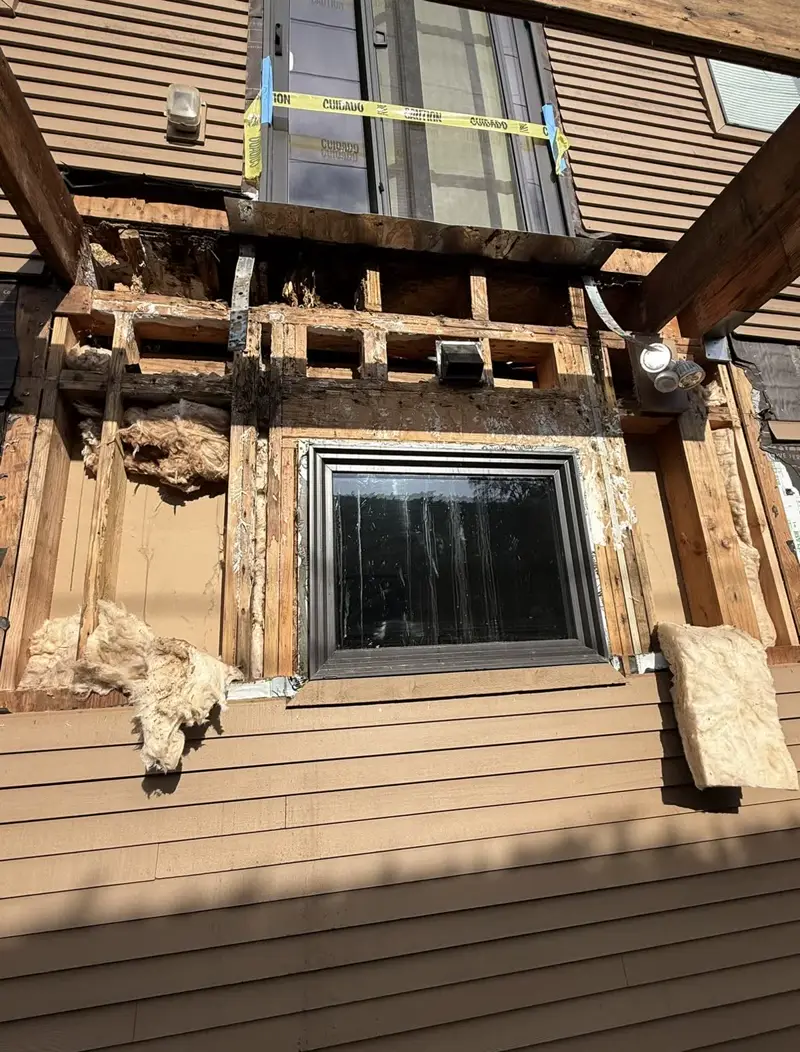 Before
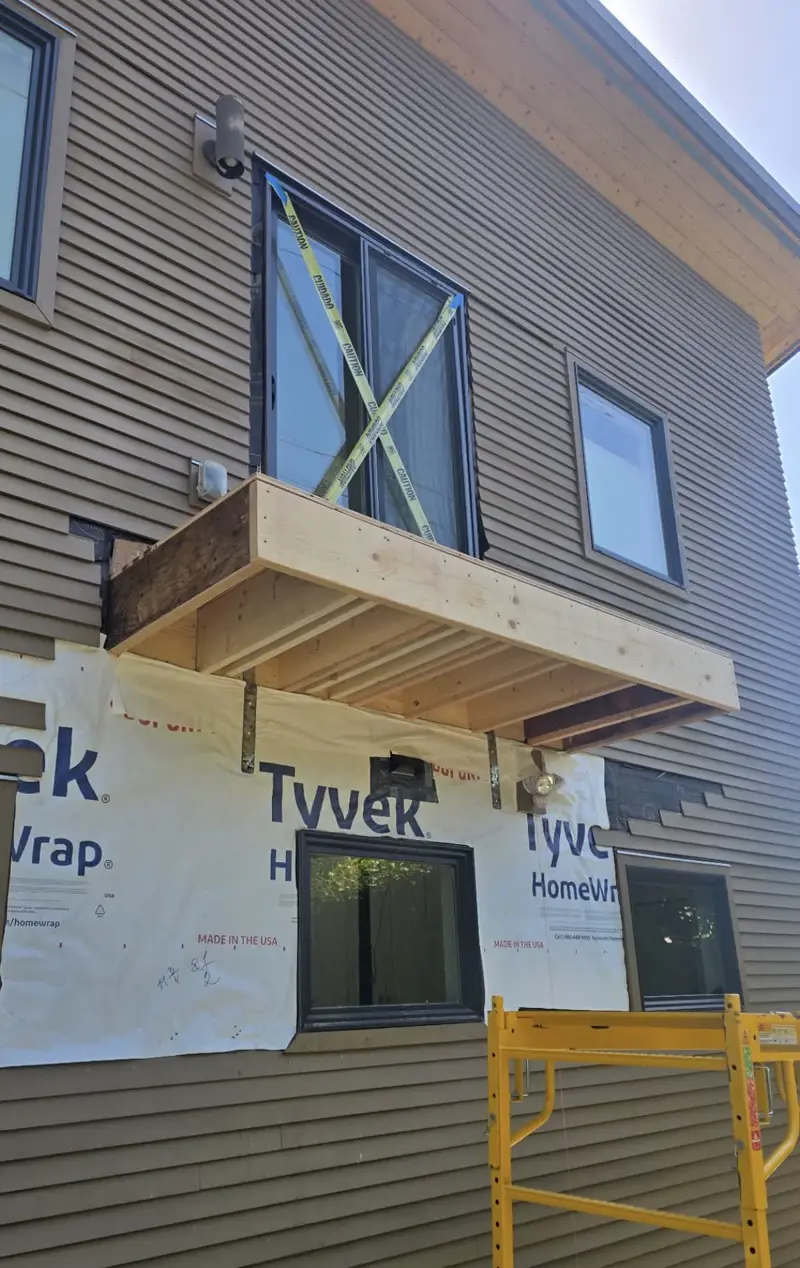 After
AfterWall under a balcony opened, flashed and rebuilt
Understanding waterproofing & flashing in older and newer homes
Flashing is the unglamorous metal or membrane detail that directs water away from a building at every seam, transition, and penetration — around windows, at rooflines, behind deck ledgers, and wherever two different materials meet. It rarely gets noticed when it's working, which is exactly the problem: a missing kick-out flashing or an undersized head flashing looks like nothing is wrong until the rot it caused finally becomes visible, often several feet away from where the water actually entered. Caulking gets used as a stand-in for flashing more often than homeowners realize, and while it can bridge a small gap for a while, it degrades with sun and temperature swings and was never meant to be a building's only water barrier. Because most of the rot and structural damage we repair traces back to a flashing failure, we spend real time tracing the water path back to its source instead of just resealing the spot where the damage happens to show.
Signs you may need waterproofing & flashing
Most homeowners notice one of these first. On their own they can look minor — together, they usually mean water has been getting in longer than it looks.
Water staining below a window or door on the exterior wall usually means the head flashing above the opening has failed and is letting water track down the wall face.
A visible gap where a roofline meets a sidewall with no flashing in sight is a direct, unprotected entry point that will let water in with almost every rainfall.
Caulking used as the only water barrier at a siding transition is a common shortcut that fails over time, since caulk degrades with UV and temperature cycling and was never meant to replace flashing.
Recurring interior staining near an exterior wall or ceiling means water has already tracked past the exterior assembly and is showing up on the inside, often far from where it entered.
Standing water or poor drainage against the foundation after rain increases hydrostatic pressure against the wall and raises the risk of moisture reaching sill plates and framing at the base.
What causes waterproofing & flashing to fail
Root cause
Flashing failures usually come from one of three sources: it was never installed during original construction (common on older homes and additions), it was installed but undersized or lapped in the wrong direction, or caulking was used in place of flashing at a transition that needed a physical water break. Failed caulking alone is rarely a long-term fix — it degrades with UV and temperature cycling and needs a proper flashing detail behind it.
How we diagnose it
We trace staining and damage patterns back to their source rather than resealing the symptom. That sometimes means checking a roof-to-wall intersection, a window head flashing, or a deck ledger — wherever the water is actually entering, which is often several feet from where the damage shows up.
How we repair it
Trace the water path
We follow staining and damage back to the actual entry point, which is often not where the damage is most visible.
Remove and assess
The affected siding, trim, or roofing detail is removed to expose the flashing (or lack of it) underneath.
Install correct flashing
Proper metal or membrane flashing is installed — kick-out flashing, head flashing, step flashing, or deck ledger flashing, as the detail requires.
Repair resulting damage and reseal
Any wood damaged by the prior leak is repaired, and the assembly is closed up with correct, durable sealant only where it belongs — not as a substitute for flashing.
Recent exterior waterproofing & flashing projects
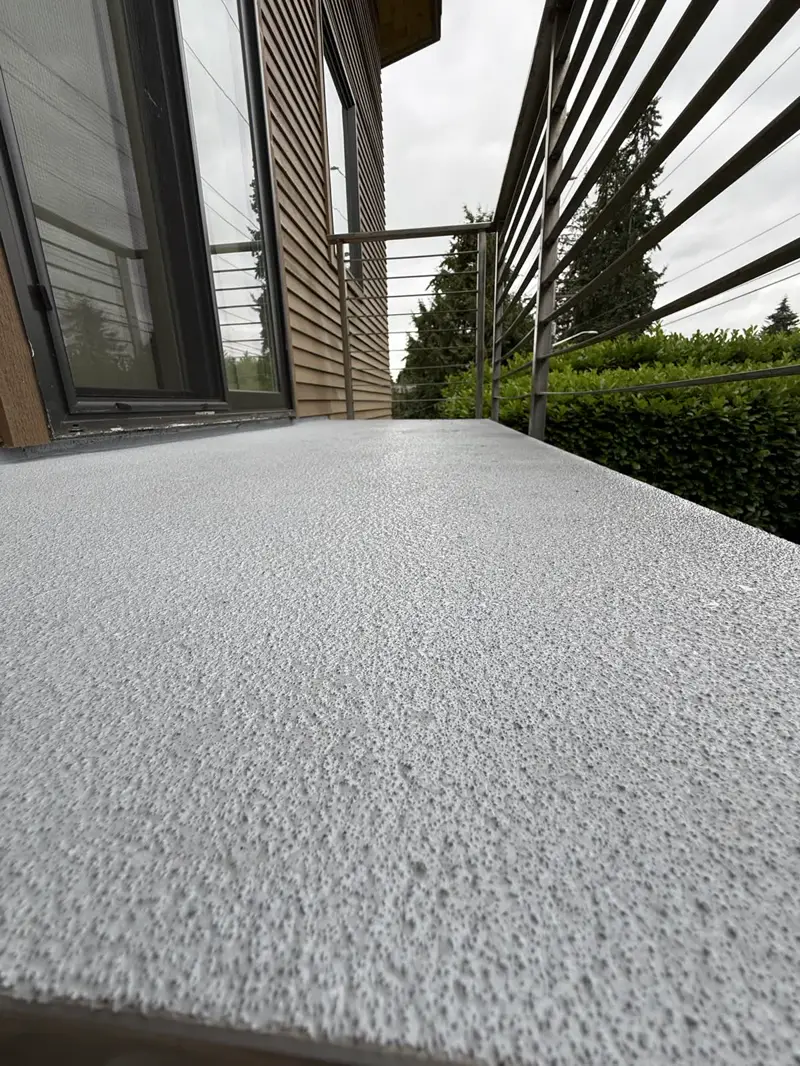
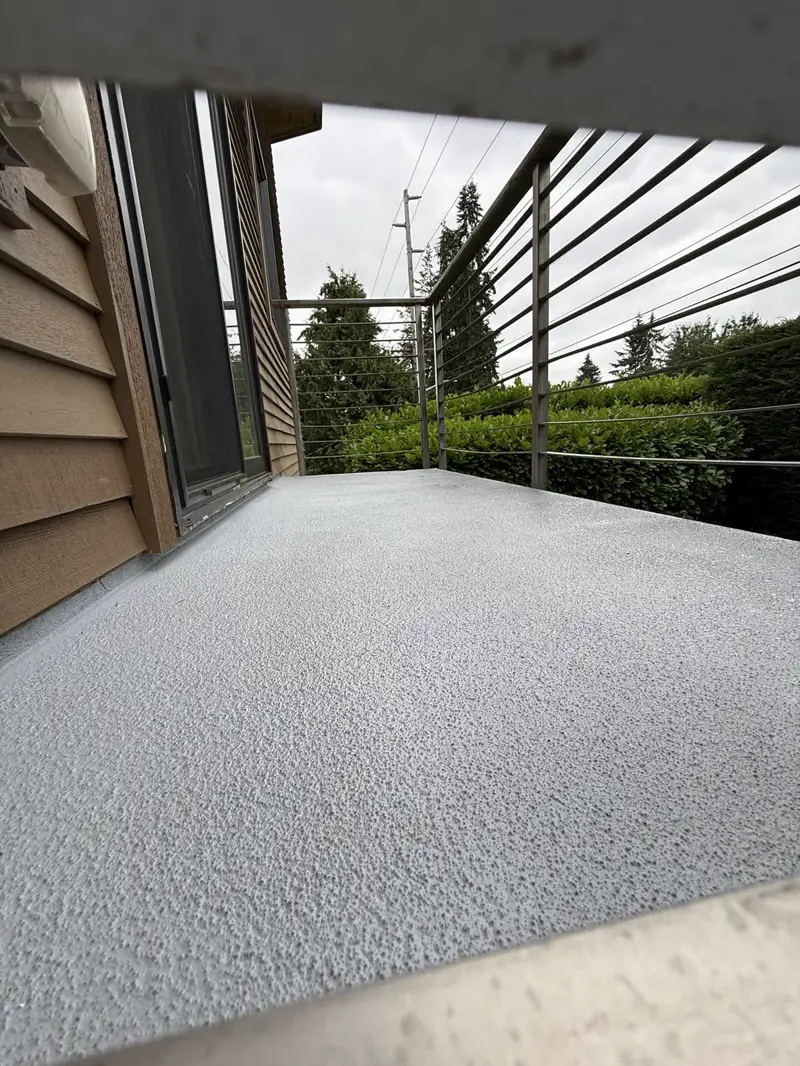
Every waterproofing & flashing job includes
A written scope before we start, and every one of these as standard — not billed as extras once we're already on site.
Water-path tracing and diagnosis that follows staining and damage back to its actual entry point, rather than resealing wherever the symptom happens to show.
Correct flashing installation at the identified failure point — kick-out, head, step, or ledger flashing, whichever the detail actually calls for.
Repair of any wood damage the leak already caused, since fixing the flashing alone doesn't undo decay that's already set in.
Appropriate, durable sealant applied only where it belongs in the assembly, not as a substitute for a flashing detail that was missing.
A written explanation of what failed and why, so you understand the cause and not just the fix.
A 24-month workmanship warranty on the flashing and any wood repair performed alongside it.
Backed by our 24-Month Workmanship Warranty
2 years on repairs; ask about coverage on new installs. Every waterproofing & flashing project includes a written scope before work begins and photo documentation of what was found and repaired.
What homeowners say about our waterproofing & flashing
“I hired Eco Home Repair to do a leak repair under my balcony, deck waterproofing and slope correction, and underlying rot repair. They were professional, quick, and fairly priced; kept me in the loop throughout the whole process and was honest about what needed to be done vs what was optional.”
“I had a great experience working with Eco Home Repair on a water damage project. Water was leaking into the house through the chimney, which caused mold and water damage issues. Eco Home Repair handled everything smoothly and professionally. They replaced the chimney cover, repaired the damaged…”
“One of my windows leaked after I had them cleaned and so I called Eco Home Repair to take a look. I really appreciated the thorough inspection - they determined the leak was unique to the aggressive window washing and wouldn't happen in regular rain (it had never leaked during rain). I appreciated…”
5.0 average from 106 reviews on Google, Thumbtack, Angi, HomeAdvisor and Yelp. Reviews were left for Eco Home Repair LLC, the company behind Goodbye Rot. Read our reviews on Google.
Waterproofing & Flashing in the Puget Sound area: what you should know
Flashing is what turns water away at every joint and opening in an exterior wall. In the Puget Sound area, almost every rot repair we do traces back to flashing that was missing, installed backwards, or replaced with caulk. Good waterproofing is mostly about laps: each layer overlaps the one below it so water always runs out.
What causes it
Kick-out flashing missing
Roof water pours into the wall where the roof edge meets siding.
No sill pans under windows and doors
Water that gets into the opening has nowhere to drain except into the framing.
Caulk-only penetrations
Dryer vents, pipes and lights without a flashed block leak once the caulk cracks.
Failed deck and balcony coatings
Walking surfaces over living space crack and let water into the framing below.
What our waterproofing and flashing includes
- Water testing and inspection to find the actual entry point
- Opening only the area needed around the problem
- Kick-out flashing, head flashing, sill pans and Z-flashing
- Flashed mounting blocks for vents, lights and pipes
- Flashing tape lapped shingle-style into the weather barrier
- Deck and balcony membranes or coatings where needed
- Siding and trim reinstalled and sealed
How to prevent it
- Check caulk joints every fall, but do not rely on caulk alone
- Look for stains below vents, lights and roof edges
- Keep gutters running so roof edges are not overloaded
- Ask for kick-out flashing whenever a roof is replaced
- Recoat balcony surfaces on the manufacturer's schedule
What affects the cost
Most flashing repairs are small in area, so the cost is mostly labor to remove and reinstall siding around the detail. If rot is found behind it, framing and sheathing repair is added, which is why fixing flashing early is the cheapest exterior repair you can make.
How long it takes
Single flashing details usually take a few hours to a day. Balcony and deck waterproofing typically takes two to four days including cure time.
Why homeowners choose Goodbye Rot
We fix the cause, not just the surface. Every waterproofing and flashing job starts with a free on-site inspection, moisture readings and photos, and you get a written scope and price before work begins. We are licensed, bonded and insured in Washington, and our repairs carry a 24-month workmanship warranty.
Waterproofing & Flashing questions
Is caulking the same as flashing?
Why does the damage show up somewhere different than the leak?
Can you fix flashing without removing siding?
How do you decide where the moisture is coming from before opening anything?
You may also need
Dry Rot Repair
Our specialty — trace the moisture, remove what's failed, rebuild what's underneath.
Dry Rot Repair detailsSiding Repair & Replacement
Cedar, composite, and lap siding matched to your home's existing look.
Siding Repair & Replacement detailsWindows, Doors & Trim Repair
Re-flashed, resealed, and rebuilt where frames or trim have failed.
Windows, Doors & Trim detailsWaterproofing & Flashing by city
What we run into with waterproofing & flashing shifts from one city to the next — lot, tree cover, and how close a house sits to water all change what we find.
Marysville
Waterproofing & Flashing in MarysvilleLake Stevens
Waterproofing & Flashing in Lake StevensMill Creek
Waterproofing & Flashing in Mill CreekMountlake Terrace
Waterproofing & Flashing in Mountlake TerraceWoodinville
Waterproofing & Flashing in WoodinvilleLake Forest Park
Waterproofing & Flashing in Lake Forest ParkMount Vernon
Waterproofing & Flashing in Mount VernonWaterproofing & Flashing across our service area
Need exterior waterproofing & flashing? Tell us about it.
- Licensed, bonded & insured
- Free on-site estimates
- 24-month workmanship warranty
Get a free estimate for waterproofing & flashing
We'll inspect the damage on-site, explain what caused it, and give you a clear written scope and price.