
Siding Repair & Replacement
Siding is your home's first line of defense against Pacific Northwest weather, but it's rarely the only thing that fails. When siding cracks, cups, or separates at a seam, water usually finds its way behind it long before the damage is visible from the street — which is why we look at what's underneath the siding, not just the siding itself.
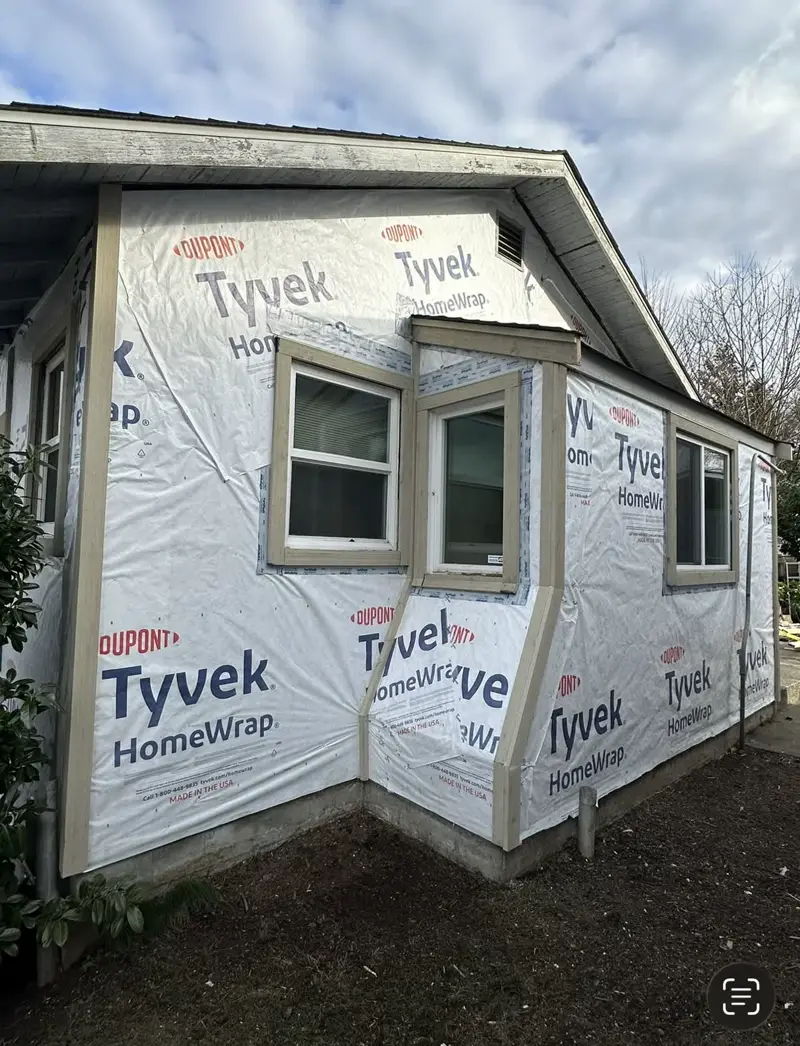 Before
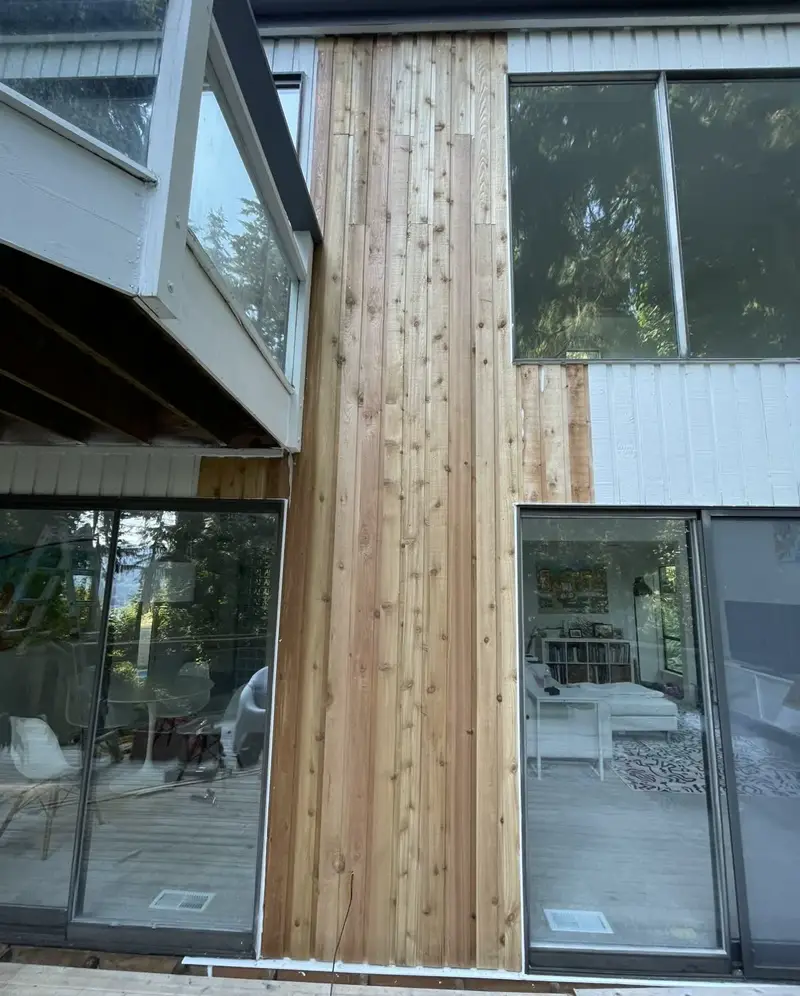
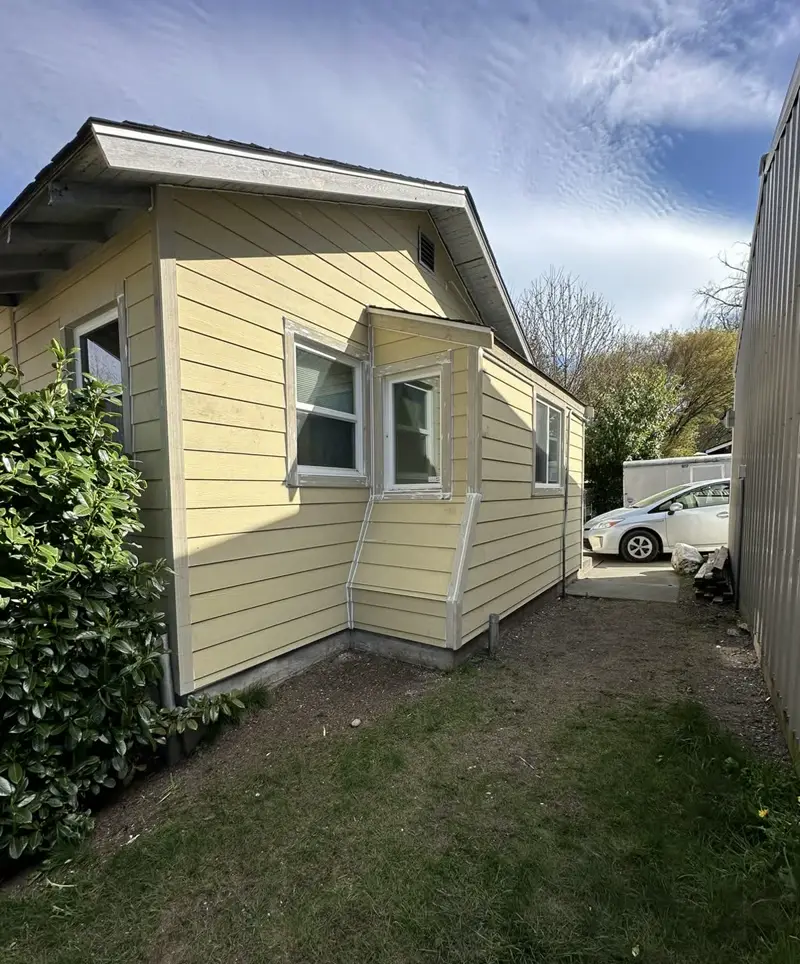 After
AfterHouse wrap first, then new siding
Understanding siding repair & replacement in older and newer homes
Siding takes the brunt of Pacific Northwest weather, but by the time a panel is visibly cracked, warped, or gapping at a seam, water has often already been working its way behind it for a season or more. Cedar and composite siding both rely on correct overlap, fastening, and flashing to shed water outward rather than trap it against the wall — and once that system breaks down at even one joint or transition, the sheathing behind the siding is exposed to moisture the panel was supposed to keep out. That's why a siding repair isn't really about the panel itself; it's about confirming what's happening on the other side of it before anything new goes back on. We open the affected section, check the water-resistive barrier and sheathing underneath, and only then decide whether it's a cosmetic fix or a repair that needs to go deeper.
Signs you may need siding repair & replacement
Most homeowners notice one of these first. On their own they can look minor — together, they usually mean water has been getting in longer than it looks.
Cracked, warped, or cupping siding panels are usually a sign the material has already absorbed more moisture than it was designed to handle, and it will keep worsening once the cupping starts.
Gaps opening up at seams, corners, or butt joints give water a direct path behind the panel, especially where flashing behind the joint was undersized or missing to begin with.
Peeling paint concentrated in one section of wall, rather than spread evenly across the house, usually points to a localized moisture problem behind that specific area rather than a paint-quality issue.
Soft or crumbling material at the bottom edge of a siding panel often means the board has been sitting too close to grade or a deck surface, wicking up moisture from below.
Visible daylight or a noticeable draft at a siding transition means the gap is large enough to let both air and water through, not just a cosmetic seam issue.
What causes siding repair & replacement to fail
Root cause
Cedar and composite siding both depend on correct overlap, fastening, and flashing to shed water. Common failure points are butt joints without proper flashing behind them, siding installed too close to grade or a deck surface, missing kick-out flashing where a roofline meets a wall, and caulking used in place of flashing at window and door transitions. Once water gets behind a panel, it's held against the sheathing rather than draining away.
How we diagnose it
We inspect the visible siding condition, check clearances at grade and roof-to-wall transitions, and look for staining patterns that indicate trapped moisture. If probing suggests damage behind the siding, we explain what opening that section would involve and what it costs before doing it.
How we repair it
Assess the affected wall
We identify how far the damage extends and whether it's isolated to siding or has reached the sheathing behind it.
Remove and inspect
Damaged panels come off in a way that lets us check the water-resistive barrier and sheathing condition underneath.
Repair the structure first
Any compromised sheathing or framing is replaced before new siding goes back on — covering damaged wood is never an acceptable repair.
Match and install
New siding is matched to your existing profile, reveal, and paint sheen as closely as the product line allows, with proper flashing at every transition.
Recent siding repair & replacement projects
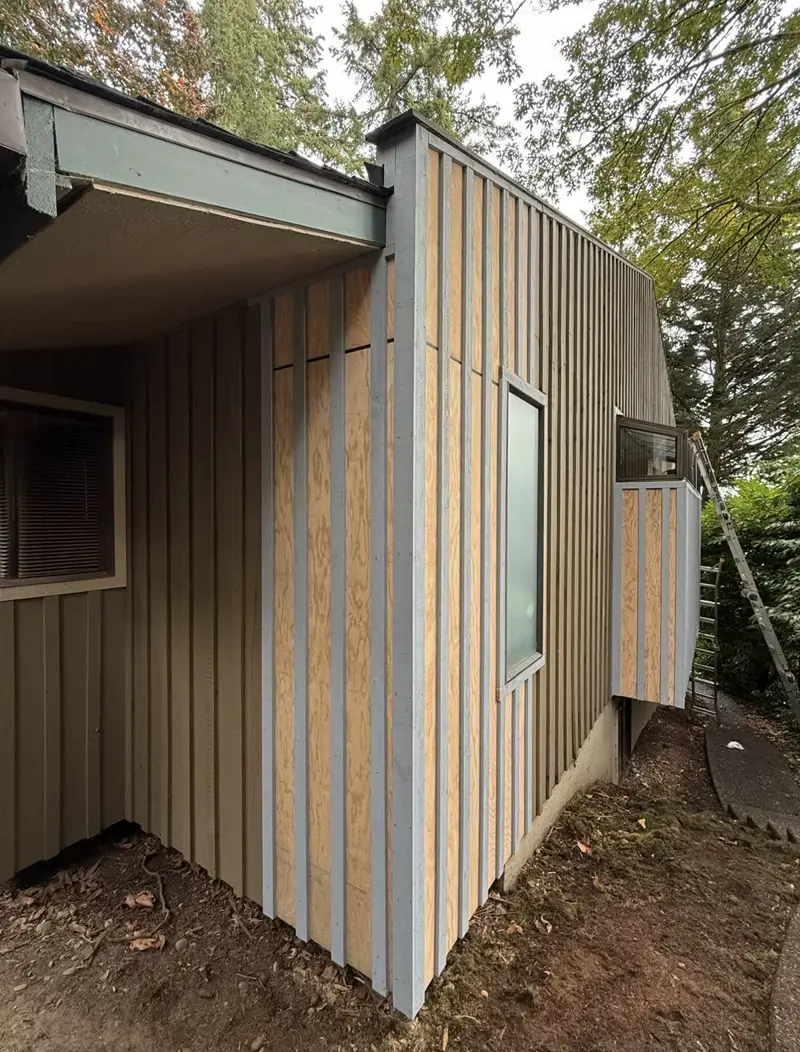
Every siding repair & replacement job includes
A written scope before we start, and every one of these as standard — not billed as extras once we're already on site.
A wall-section inspection and written scope of work before anything comes off, so you know what we expect to find and what the repair will involve.
Removal of the damaged siding and a full inspection of the water-resistive barrier and sheathing behind it, since that's usually where the real damage is.
Repair of any compromised sheathing or framing found underneath, completed before a single new siding panel goes back on the wall.
New siding matched to your existing profile, reveal, and paint sheen as closely as the product line allows.
Correct flashing installed at every joint, corner, and penetration in the repaired section, not just caulk substituted where flashing belongs.
A 24-month workmanship warranty on the siding and any structural repair performed behind it.
Siding Repair & Replacement before & after
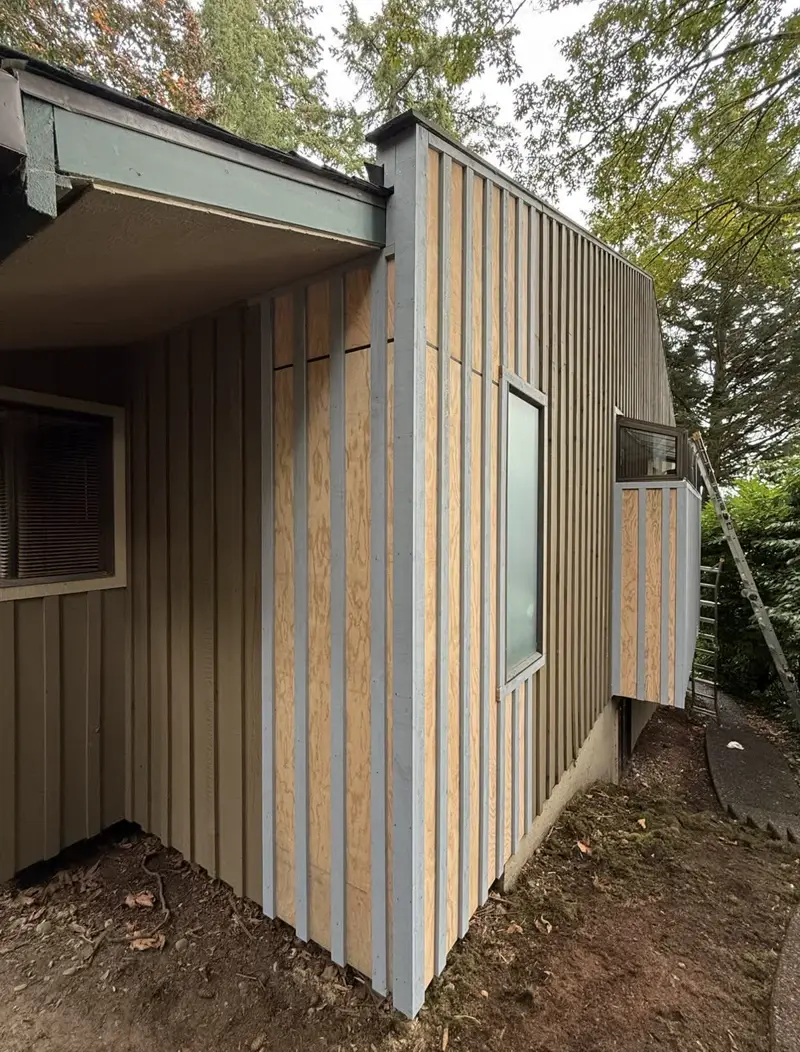
Our projectBoard and batten siding going on
Backed by our 24-Month Workmanship Warranty
2 years on repairs; ask about coverage on new installs. Every siding repair & replacement project includes a written scope before work begins and photo documentation of what was found and repaired.
What homeowners say about our siding repair & replacement
“We're extremely pleased with our new siding and couldn't be happier with the final result. All workers were professional, courteous and very easy to work with from start to finish. They handled the installation carefully and made sure every detail was done properly. Once the job was completed, they…”
“Alex is very friendly and fast in responding to our questions. I contacted Eco Home Repair and Alex showed up the next day to give us an estimated cost. Once we signed the contract, he immediately scheduled the time and date with us to replace our siding and get it done as promised. Thank you Alex!”
“Gave an honest and reasonable quote. Restored water damaged siding, looks great. Alex was responsive and gave me a quote for replacing the whole house too, but I opted to wait and just fix the damaged spot. He worked around our window and hvac with no issue.”
5.0 average from 106 reviews on Google, Thumbtack, Angi, HomeAdvisor and Yelp. Reviews were left for Eco Home Repair LLC, the company behind Goodbye Rot. Read our reviews on Google.
Siding Repair & Replacement in the Puget Sound area: what you should know
Siding is the outer shell that sheds most of the rain, but it is not the only waterproofing. Behind it are the weather barrier and flashing that catch the water that gets past. In the Puget Sound area, we see siding fail where those layers were skipped or have worn out, and where boards sit too close to the ground, decks or roofs. A good siding repair fixes the surface and the details behind it.
What causes it
No clearance at grade
Fiber cement needs about 6 inches above soil and mulch, and around 2 inches above roofs and decks. Buried edges swell, flake and rot the wall behind them.
Unsealed cut ends and butt joints
Fiber cement cut edges must be primed and joints flashed. Without that, water wicks in and the planks swell.
Worn-out weather barrier
Older felt or torn house wrap lets water reach the sheathing, especially at seams and around openings.
Paint failure
Once paint cracks and peels, wood siding takes on water and fiber cement edges start to break down.
What our siding repair includes
- Inspection of the siding, barrier and sheathing behind it
- Removal of damaged siding and trim
- Sheathing repair where the wall is soft
- New weather barrier lapped into the existing barrier
- Flashing at windows, doors, roof lines and penetrations
- New siding matched to profile, exposure and texture
- Primer and paint matched to your house, or factory-finished siding
How to prevent it
- Keep landscaping and mulch below the bottom course
- Repaint before paint fails, and touch up chips at cut edges
- Clean siding gently once a year to remove moss and mildew
- Fix gutter overflow so water does not sheet down the wall
- Have flashing checked whenever you replace a roof or add a deck
What affects the cost
Siding cost depends on the material (fiber cement, cedar or engineered wood), the size of the area, how many windows and corners it includes, and whether the sheathing behind it is sound. A section repair costs far less than a full wall, and a full wall far less than a whole house. We tell you which one you need after opening the area and checking the barrier.
How long it takes
A section repair usually takes one to two days. A full wall takes two to four days, and a whole-house re-side typically takes one to three weeks depending on size, trim details and weather.
Why homeowners choose Goodbye Rot
We fix the cause, not just the surface. Every siding repair job starts with a free on-site inspection, moisture readings and photos, and you get a written scope and price before work begins. We are licensed, bonded and insured in Washington, and our repairs carry a 24-month workmanship warranty.
Siding options for the Puget Sound area homes
Fiber cement (James Hardie)
HardiePlank lap, shingle and panel siding. Will not rot, resists fire and pests, and holds paint well. The most common choice for our climate.
Western red cedar
Natural wood lap, bevel or shingles. Beautiful and traditional, but needs regular paint or stain to last.
Engineered wood (LP SmartSide)
Treated wood-strand siding that is lighter than fiber cement and comes in long lengths.
Board and batten
Vertical panels with battens over the seams, in fiber cement or wood, popular on modern farmhouse and accent walls.
Repair or full replacement?
Section repair
Damage is local, the barrier behind it is sound, and the siding can be matched. Common at roof lines, windows and the bottom courses.
Full wall
One wall takes most of the weather or has failed throughout. We strip and re-side the wall so it all matches.
Whole house
Siding has reached the end of its life, is a discontinued product like old hardboard, or you want a new look and full new barrier.
We open a small area first to check the barrier and sheathing, then tell you which option fits.
Fiber cement installed the way it should be
- About 6 inches of clearance above soil and mulch, and 1–2 inches above roofs and decks
- Kick-out flashing wherever a roof edge meets a wall
- Flashing behind every butt joint
- Primed and sealed cut ends
- Head flashing over windows and doors, sill pans under them
- Weather barrier lapped shingle-style, with taped seams around openings
- Correct nailing, never face-nailed too tight
Most fiber cement failures we see are installation problems, not product problems. Getting these details right is what makes a siding job last.
Paint and color
Fiber cement can come factory-painted (James Hardie ColorPlus) or primed and painted on site. Factory finish is very durable; field paint lets you match any color exactly and touch up easily. For repairs we match your existing color so the new section blends in.
Siding Repair & Replacement questions
Will the repaired section match my existing siding?
Can you repair one wall without re-siding the whole house?
What's usually found behind failed siding?
Do you work on both cedar and vinyl or composite siding?
You may also need
Dry Rot Repair
Our specialty — trace the moisture, remove what's failed, rebuild what's underneath.
Dry Rot Repair detailsWaterproofing & Flashing
Flashing and drainage details that stop the next leak before it starts.
Waterproofing & Flashing detailsFascia & Soffit Repair
The roofline trim that hides gutter overflow damage until it's serious.
Fascia & Soffit Repair detailsSiding Repair & Replacement by city
What we run into with siding repair & replacement shifts from one city to the next — lot, tree cover, and how close a house sits to water all change what we find.
Lake Stevens
Siding Repair & Replacement in Lake StevensMountlake Terrace
Siding Repair & Replacement in Mountlake TerraceWoodinville
Siding Repair & Replacement in WoodinvilleLake Forest Park
Siding Repair & Replacement in Lake Forest ParkMount Vernon
Siding Repair & Replacement in Mount VernonSiding Repair & Replacement across our service area
Need siding repair & replacement? Tell us about it.
- Licensed, bonded & insured
- Free on-site estimates
- 24-month workmanship warranty
Get a free estimate for siding repair & replacement
We'll inspect the damage on-site, explain what caused it, and give you a clear written scope and price.