
7 places dry rot hides on Pacific Northwest homes
October 30, 2026 · Goodbye Rot crew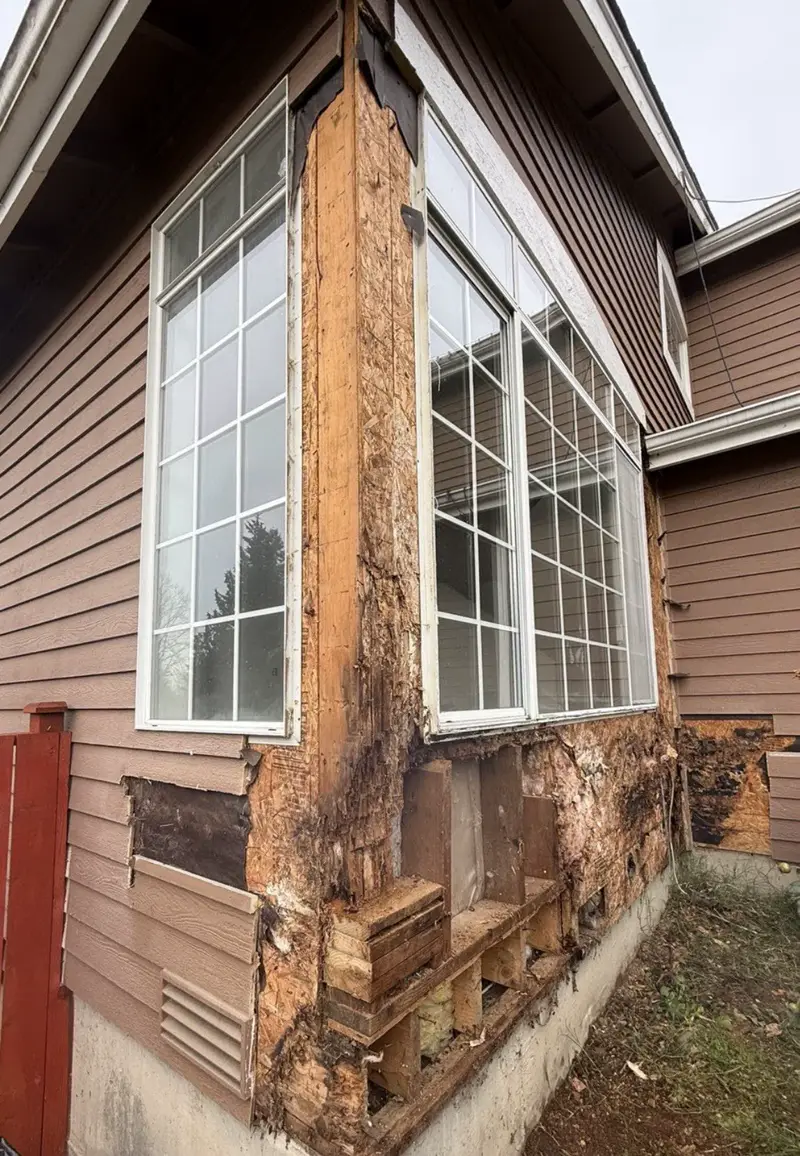
Most of the rot we repair was there for years before anyone noticed it. Wood rots where water sits and can't dry out, and in our climate that means from October to May a lot of wood never really dries. The trouble is that the worst spots are usually hidden behind paint, siding or decking.
Here are the seven places we check first on almost every house we visit, from Seattle and Bellevue up to Everett, Marysville and Mount Vernon.
1. Under window sills and at the bottom corners of windows
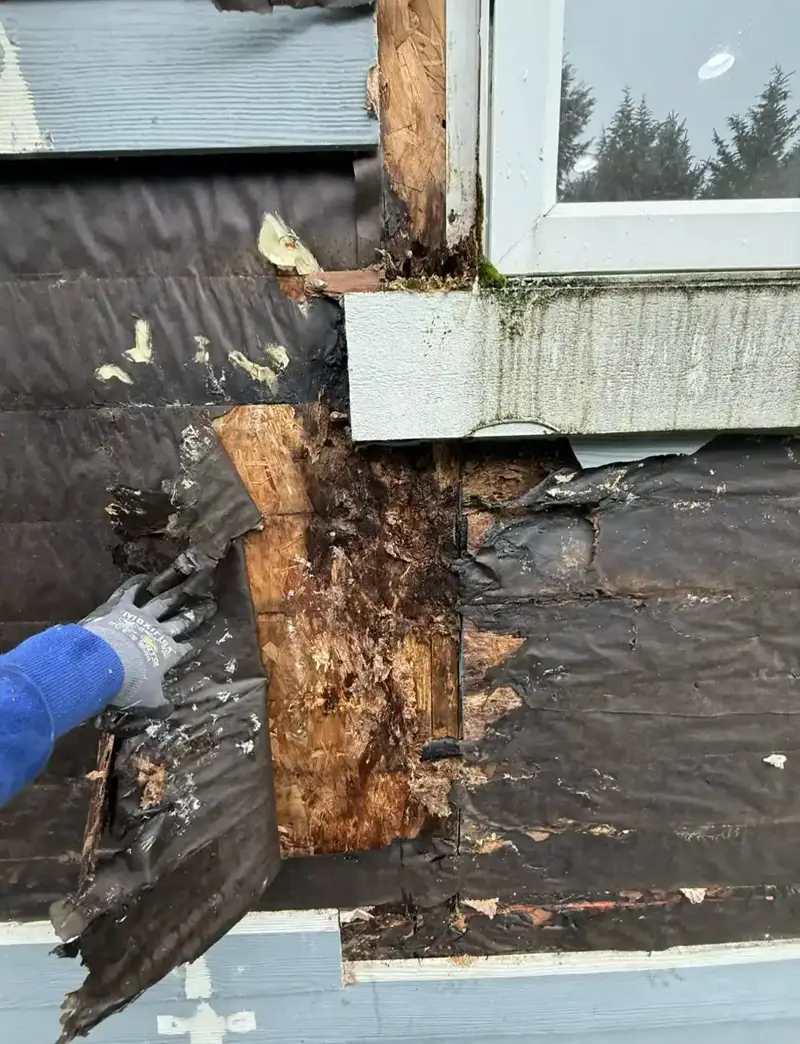
Water that gets past a window frame runs down to the sill and then into the wall below it. If the window was installed without a sill pan or the flashing tape has failed, the sheathing under the window soaks it up. From outside you might only see a small stain, peeling paint at the corners of the trim, or a sill that feels soft when you press it with a screwdriver.
2. Where siding meets the roof
Anywhere a wall runs up past a lower roof, water from the roof runs along that wall. Without a kick-out flashing at the bottom of that roof edge, the water gets dumped straight behind the siding. This is one of the most common causes of serious rot we see, and it often shows up as a dark streak or swelling below the end of the gutter.
3. The bottom course of siding
The lowest row of siding takes splash from rain, sprinklers and downspouts. LP and hardboard siding are especially sensitive here: once the paint wears off the bottom edge, they soak up water and swell. If the siding is touching soil, a patio or a deck surface, it wicks water up all day long.
4. Deck ledgers and the wall behind a deck
The ledger is the board that attaches a deck to the house. If it wasn't flashed properly, water runs between the ledger and the wall and rots both. You usually can't see this from the deck surface. Look from underneath: dark, soft or crumbly wood along the house side of the deck is a warning sign. We wrote more about checking a deck ledger.
5. Porch posts and columns at the base
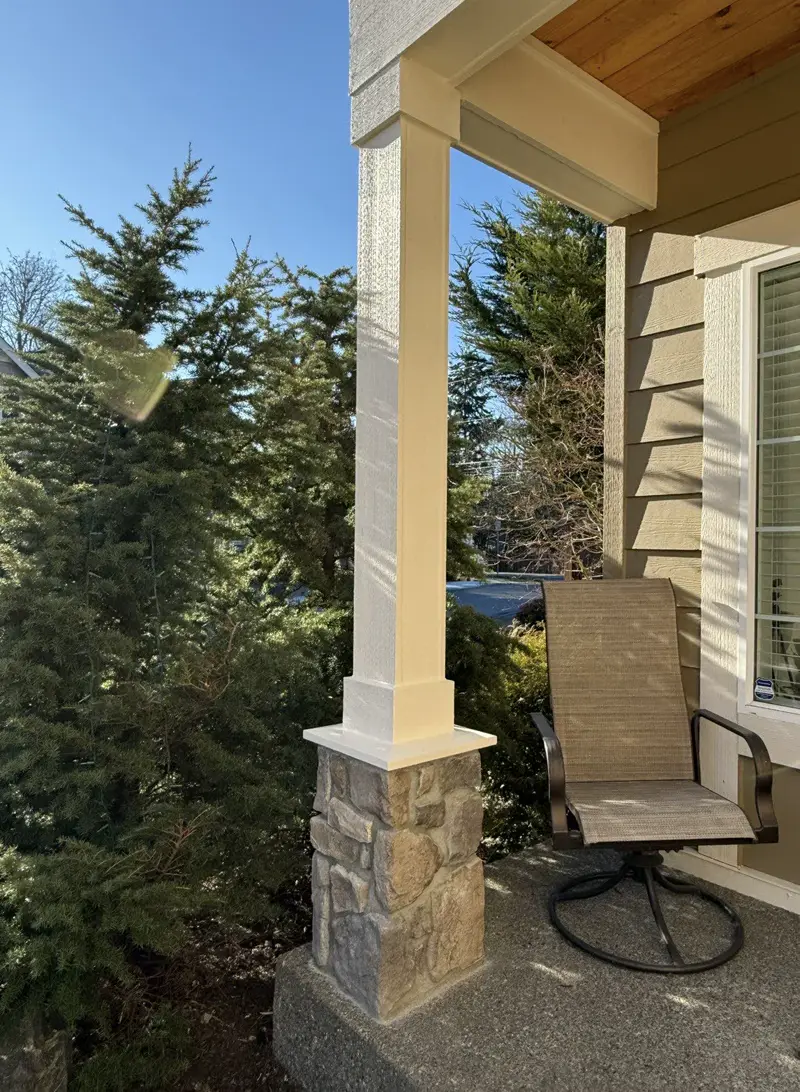
Wrapped porch columns look solid, but the post inside often sits in water at the bottom. On a recent porch job in Redmond we replaced all four front columns because the bases had rotted inside the trim while the outside still looked fine. If a column base feels soft, or the trim at the bottom is swollen or open at the seams, it's worth a look.
6. Fascia boards behind the gutter
Overflowing or leaking gutters soak the fascia board behind them, and the rot then spreads into rafter tails and the roof edge. Peeling paint or a wavy line along the fascia is a common first sign. Fascia repairs are among the most frequent small jobs we do in Shoreline, Mukilteo and Mill Creek.
7. Chimney chases
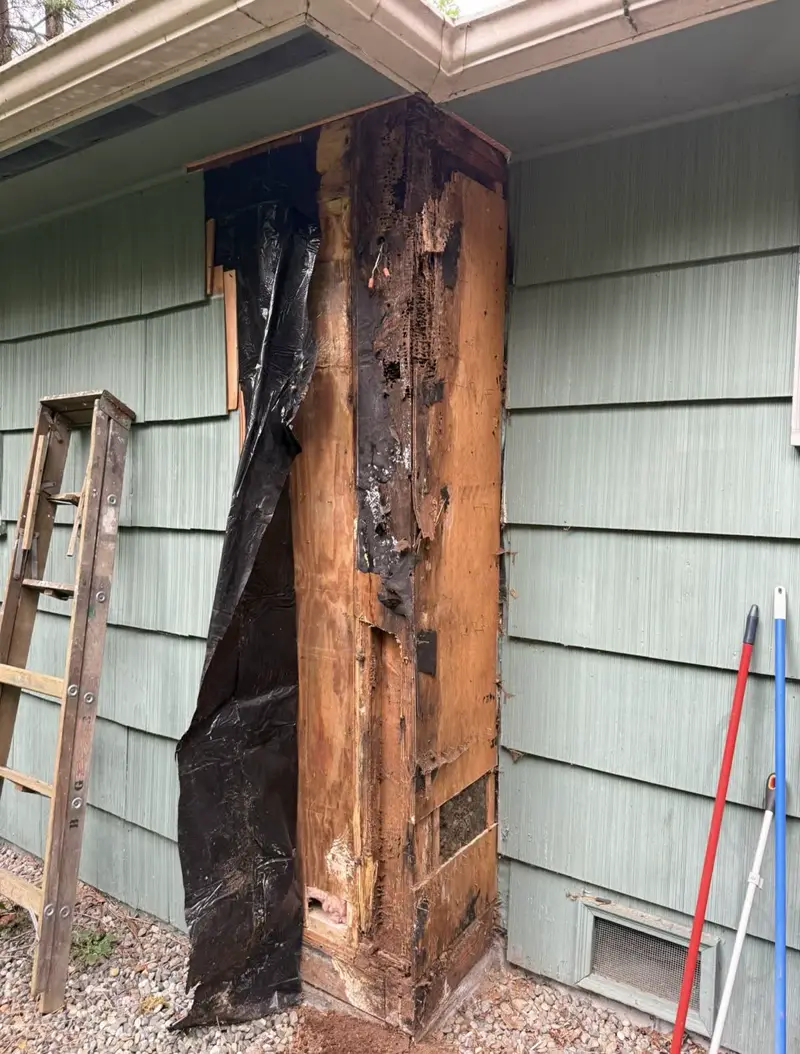
Wood-framed chimney chases are boxes of siding with a metal cap on top. When the cap rusts or is installed flat, water pools and runs into the framing. We have rebuilt chases where the framing inside had turned to powder while the siding still looked mostly fine.
How to check your own house
Once a year, ideally in late summer when everything is dry, walk around the house with a flat screwdriver.
- Press it gently into sills, trim corners, the bottom edge of siding and post bases. Sound wood resists. Rotted wood lets the tip sink in.
- Look for paint that bubbles or peels in one spot while the rest of the wall is fine. That usually means moisture from behind.
- Check under decks and porches with a flashlight, especially along the house.
- Watch where your gutters and downspouts actually put the water during a heavy rain.
When to call someone
Small, soft spots in trim can often be fixed quickly. But if the screwdriver goes in deep, if you see rot in more than one board, or if the soft area is near a window, a roof line or a deck, the damage behind it is often bigger than what shows. That's when it pays to open it up properly, find where the water is coming from and fix that too. Otherwise the new wood rots the same way.
If you're not sure what you're looking at, send us a photo. We'll tell you whether it looks like a small repair or something to open up.
Need dry rot repair?
We find the leak, rebuild only what failed and back it with a 24-month warranty. Free on-site estimate.
Dry rot repair →More from the blog
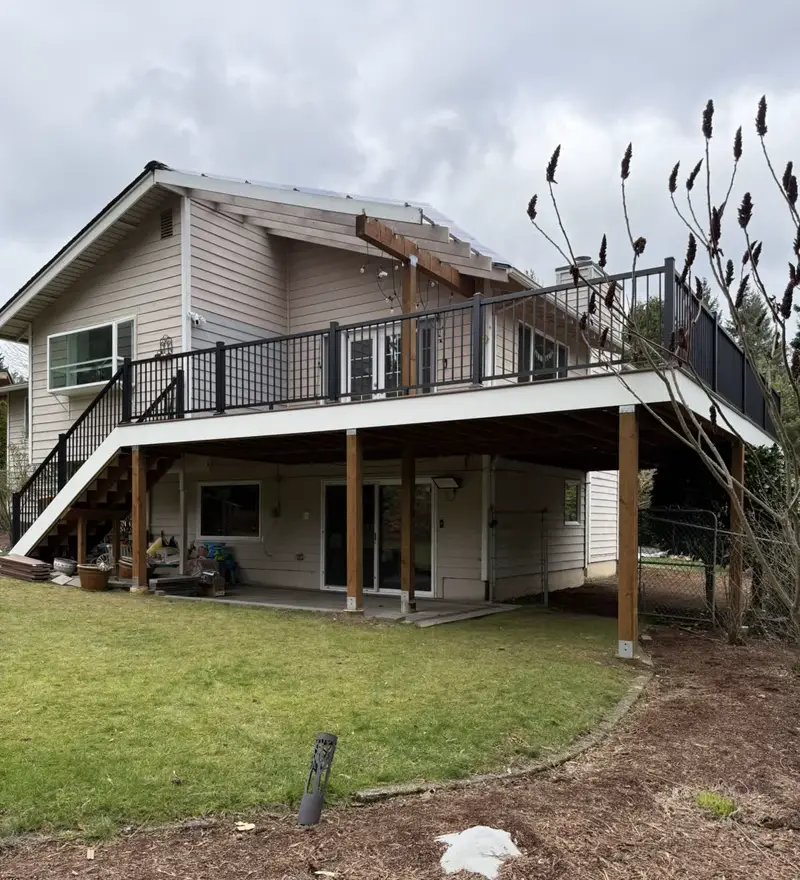
How to check your deck ledger for rot (and why it matters)
The ledger board holds your deck to the house, and it's the most common place a deck rots. Here's how to check it from underneath in ten minutes.
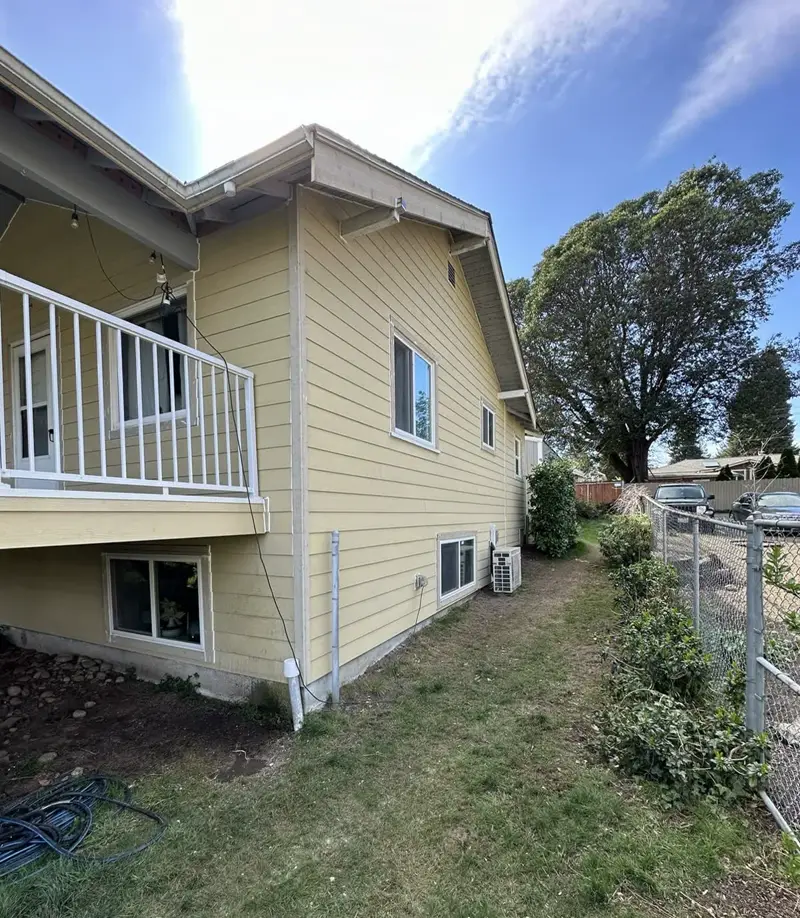
LP siding swelling at the bottom? What it means and when to repair it
Swollen, flaking bottom edges on LP or hardboard siding mean water is getting in. Why it happens, how bad it is, and your repair options.
Get a free estimate
Tell us what you're seeing. We'll call you back and set up a free on-site visit.
Thanks — we got it
We'll call you back shortly, usually within the hour during business hours. Need us now? Call 425.600.7002.