
LP siding swelling at the bottom? What it means and when to repair it
October 30, 2026 · Goodbye Rot crew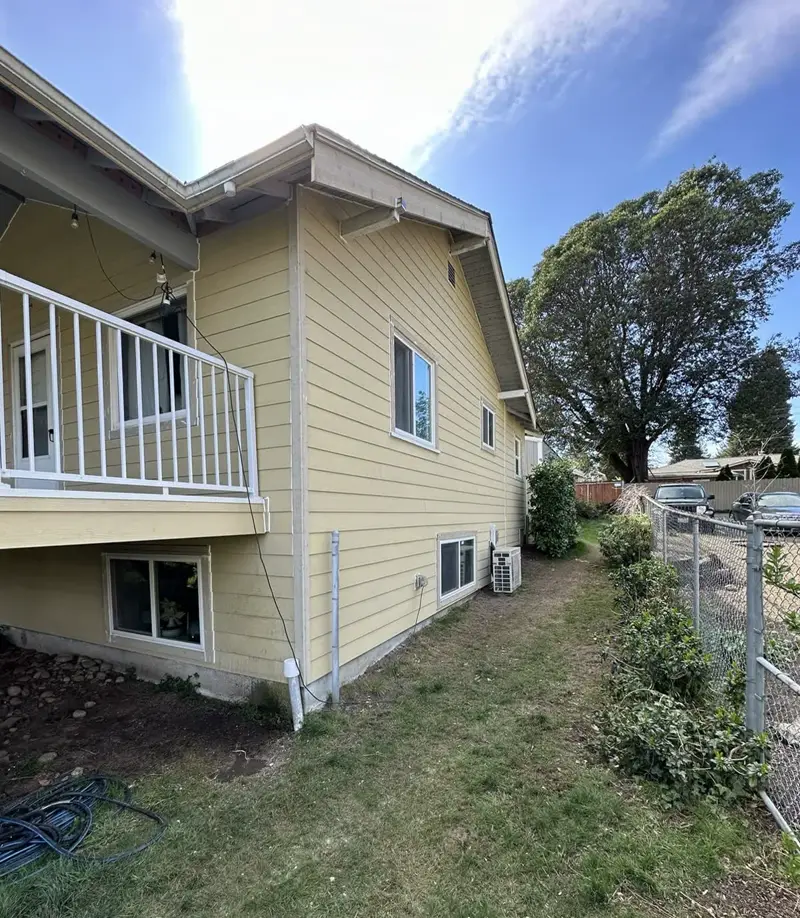
If your house was built between the 1980s and the early 2000s, there's a good chance it has engineered wood siding: LP (Louisiana-Pacific, including the older Inner-Seal and newer SmartSide) or hardboard siding such as Masonite. It's made from wood fibers or strands pressed together with resin. When it stays painted and dry it can last a long time. When water gets into it, it swells.
The bottom edge is almost always where you see it first.
What swelling looks like
- The bottom edge of each board looks thicker, rounded or "puffy"
- Paint flakes off the bottom edge and the exposed fibers look fuzzy
- Boards near the ground, under windows or below a roof line are worse than the rest
- In bad cases the board is soft, crumbles at the edge or has small mushroom-like growths
Why it happens
Every board has a cut edge at the bottom and at each end. Those edges were supposed to be sealed with paint, and the paint was supposed to be kept up. Once the paint on the bottom edge wears through, water wicks into the board. Each wet winter it swells a little more, and swollen fibers never go back to their original shape.
The usual culprits:
- Paint that's past its life, especially on the bottom edge you never look at
- Siding too close to the ground, a patio or a deck surface, so splash keeps it wet
- Missing kick-out flashing where a roof edge ends against the wall
- Gaps at butt joints and around windows where the caulk has failed
- Sprinklers that hit the same section of wall every day in summer
How bad is it?
Light swelling with intact paint is mostly cosmetic. You can often clean, prime and paint the edges and buy years.
If the board is soft when you press it, or the edge crumbles, the board is done. The bigger question is what's behind it. Water that got through the siding may have reached the sheathing and framing. That's why we never just slap new boards over old sheathing. We pull a few boards, check the wrap and the wood behind, and then decide.
Repair options
Replace individual boards
If the damage is limited to a few boards, we replace them with new LP SmartSide or fiber-cement in the same profile and reveal, flash the joints, and paint to match. This is the most common repair we do on homes in Marysville, Everett and Lake Stevens.
Cut back the bottom and add a trim band
When the lowest course across a wall is damaged but the rest is fine, one option is to cut off the bottom few inches and install a flashed trim band (a "belly band") with a drip edge. This lifts the siding away from splash and gives the wall a finished look.
Replace the wall
If most of a wall is swollen, piecing it together costs almost as much as starting over. Replacing a full wall lets us install new house wrap and flash every window and door correctly. On a recent job in Mukilteo we replaced a full 688 sq ft wall with HardiePlank, new moisture barrier and paint.
Does fiber-cement fix the problem?
Fiber-cement siding like James Hardie doesn't swell or rot the way LP and hardboard can. But it still depends on the flashing and wrap behind it. If water gets behind fiber-cement, the sheathing and framing still rot. Whatever siding you choose, the details at windows, roof lines and the bottom of the wall matter more than the boards themselves.
The short version
Swollen bottom edges mean water is getting in. Catching it while it's only a few boards keeps the repair small. If you're seeing it on your house, send us a photo of the worst spot and we'll tell you what we'd expect to find behind it.
Need siding repair & replacement?
We find the leak, rebuild only what failed and back it with a 24-month warranty. Free on-site estimate.
Siding repair & replacement →More from the blog
How to check your deck ledger for rot (and why it matters)
The ledger board holds your deck to the house, and it's the most common place a deck rots. Here's how to check it from underneath in ten minutes.
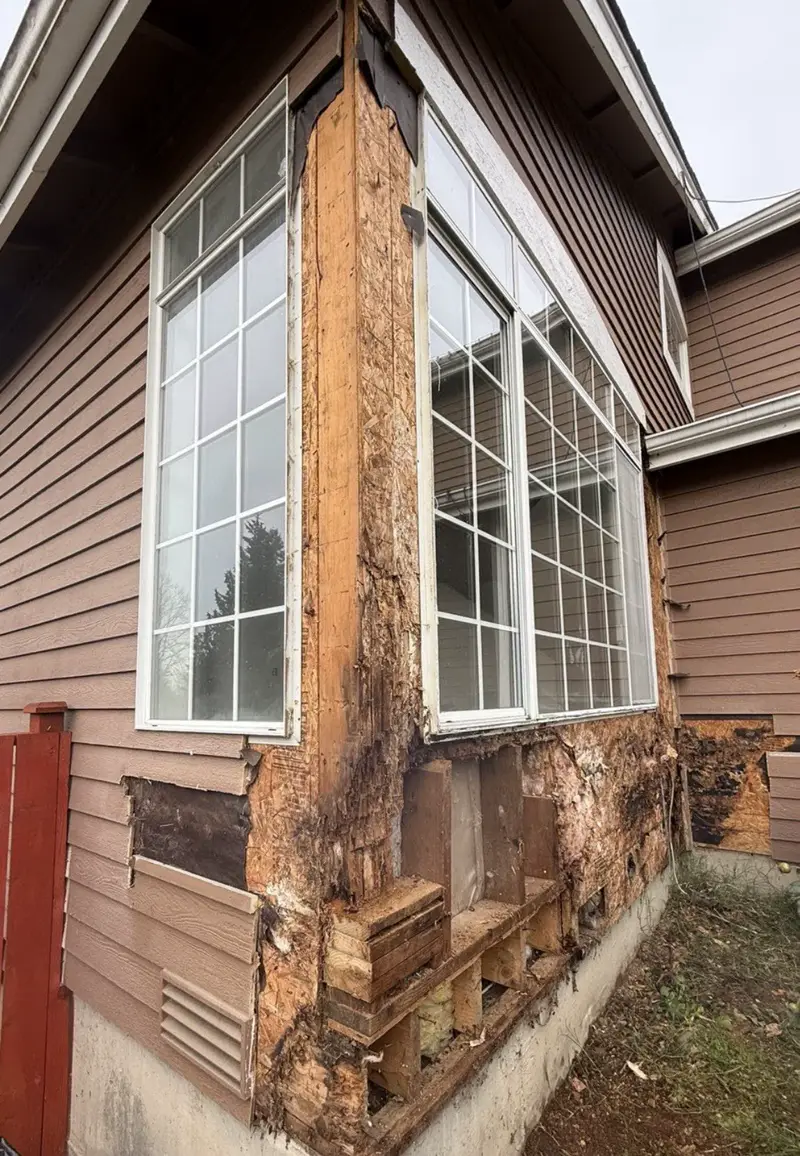
7 places dry rot hides on Pacific Northwest homes
Dry rot rarely starts where you can see it. The seven spots our crew checks first on Seattle-area homes, and what to look for at each one.
Get a free estimate
Tell us what you're seeing. We'll call you back and set up a free on-site visit.
Thanks — we got it
We'll call you back shortly, usually within the hour during business hours. Need us now? Call 425.600.7002.