
How to check your deck ledger for rot (and why it matters)
October 30, 2026 · Goodbye Rot crew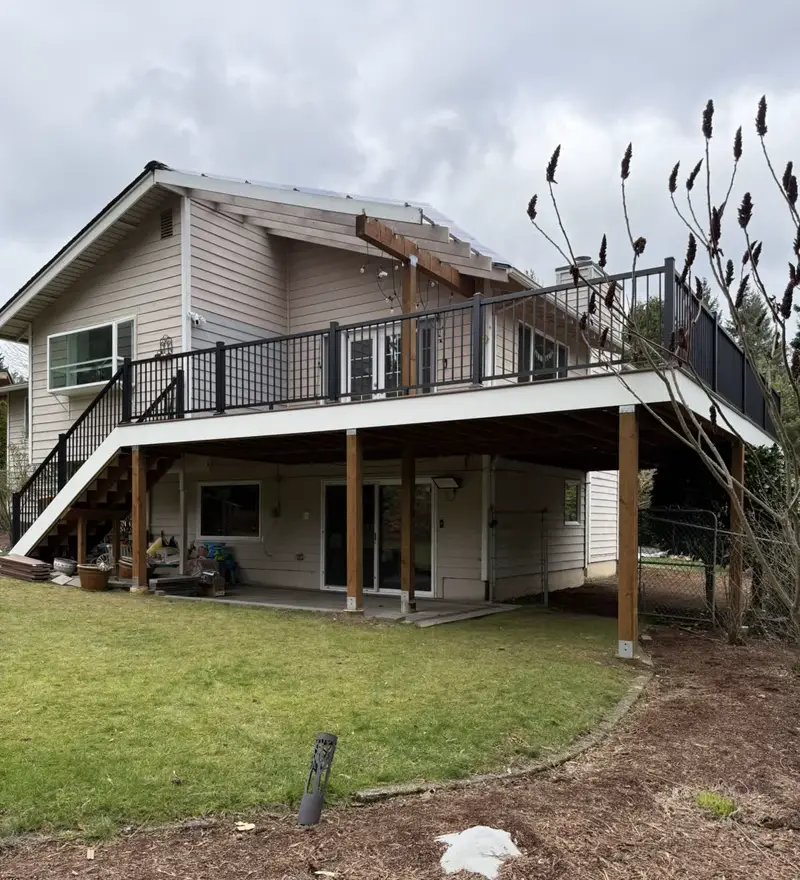
Most deck failures don't start with the boards you walk on. They start at the ledger: the board bolted to your house that carries one side of the whole deck. If the ledger rots, the deck can pull away from the house, and water that rotted the ledger usually rotted the wall behind it too.
The good news is you can check it yourself in about ten minutes.
What you need
- A flashlight
- A flat screwdriver or an awl
- A way to see under the deck (for a second-story deck, binoculars from the ground and a ladder for the close look)
Step 1: Find the ledger
Go under the deck and look at where it meets the house. The ledger is the long board running along the wall, with the joists hanging off it in metal hangers.
Step 2: Look for flashing
Above the ledger there should be a metal or membrane flashing that runs up the wall behind the siding and over the top of the ledger, so water runs off instead of between the ledger and the house. On many older decks there is none, or it's tucked in front of the siding where it does nothing.
Step 3: Look for the warning signs
- Dark stains on the ledger or the siding right below it
- Wood that looks crumbly, cracked across the grain, or has white or brown fuzz
- Rusty hangers or bolts, or bolts with rust streaks running down
- Joists that have dropped in their hangers or have a gap at the top
- Nails instead of bolts or structural screws holding the ledger to the house
Step 4: Probe it
Press the screwdriver into the ledger near the top edge, near the bolts and at each end. Then do the same at the ends of a few joists where they meet the ledger. Sound wood resists. If the tip sinks in more than about a quarter inch with light pressure, that wood is rotting.
Step 5: Check the posts and the joist tops
While you're under there, check the bottom of each post, especially where a post sits in concrete or on the ground. Posts buried in concrete hold water and rot at the base. Also look at the tops of the joists where the boards sit: water collects there between every board.
What we do when we find a rotted ledger
A rotted ledger is not a patch job. We support the deck temporarily, remove the old ledger, open the siding behind it, repair any rotted sheathing or rim joist, install proper flashing up behind the siding, and bolt on a new pressure-treated ledger with structural fasteners. We tape the tops of the joists so they last longer, and we tell you if the rest of the deck is worth keeping.
Sometimes it isn't. When the ledger, posts and most of the joists have rot, a rebuild usually costs about the same as chasing every bad piece, and you get a deck built to current code. In Arlington we recently built a new composite deck with an aluminum railing and a covered roof so the owners can use it in the rain.
How often to check
Once a year is plenty for most decks, ideally in late summer or early fall before the wet season. Decks on the shady side of the house, under big trees or near the water (Lake Stevens, Mukilteo, Edmonds) deserve a closer look.
When to call
Call a pro if you find soft wood on the ledger, rust on the hangers or bolts, a gap between the deck and the house, or posts that are soft at the bottom. These are structural parts, and it's better to know now than after something moves.
If you'd like a second opinion, send us a few photos from underneath the deck. We'll tell you whether it looks like a repair or a rebuild.
Need deck repair & rebuilding?
We find the leak, rebuild only what failed and back it with a 24-month warranty. Free on-site estimate.
Deck repair & rebuilding →More from the blog
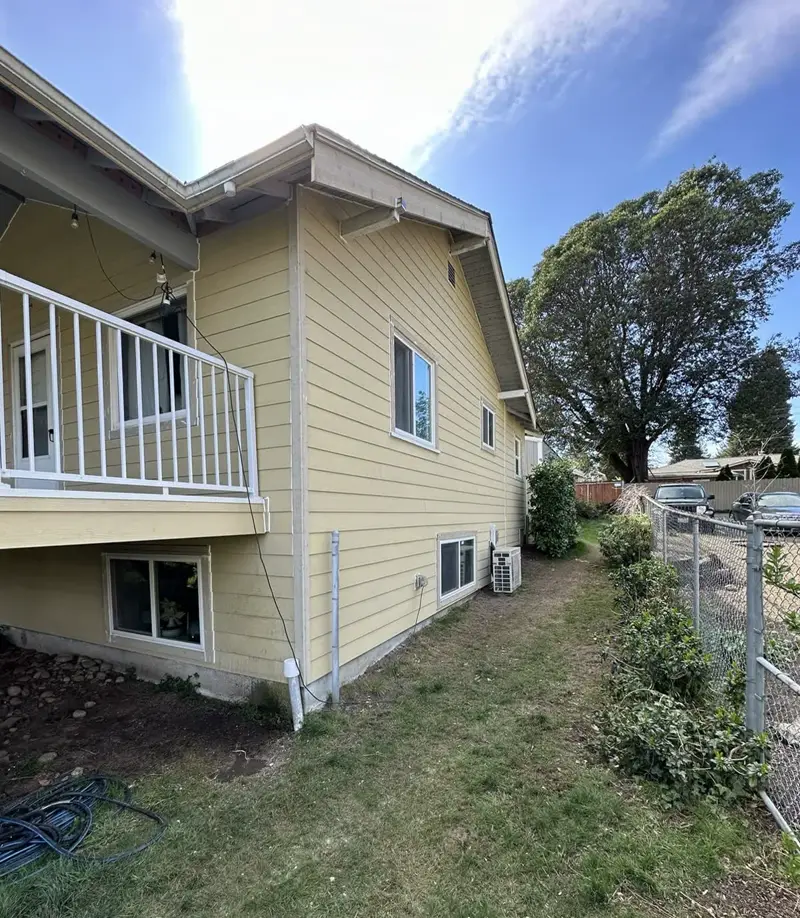
LP siding swelling at the bottom? What it means and when to repair it
Swollen, flaking bottom edges on LP or hardboard siding mean water is getting in. Why it happens, how bad it is, and your repair options.
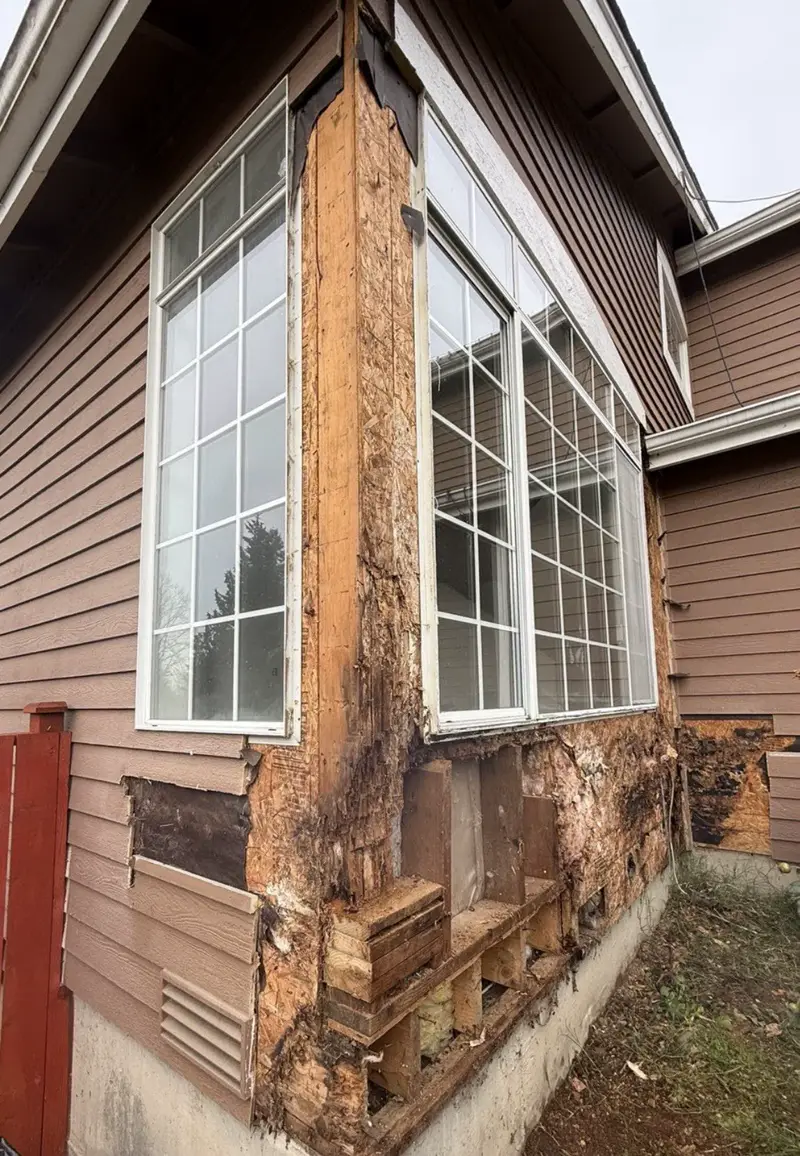
7 places dry rot hides on Pacific Northwest homes
Dry rot rarely starts where you can see it. The seven spots our crew checks first on Seattle-area homes, and what to look for at each one.
Get a free estimate
Tell us what you're seeing. We'll call you back and set up a free on-site visit.
Thanks — we got it
We'll call you back shortly, usually within the hour during business hours. Need us now? Call 425.600.7002.