
Dry Rot Repair in Mill Creek, WA
We trace where water gets in, cut out every soft section of siding, sheathing and framing, and rebuild with the flashing fixed so the rot does not come back. We serve homeowners across Mill Creek and Snohomish County.
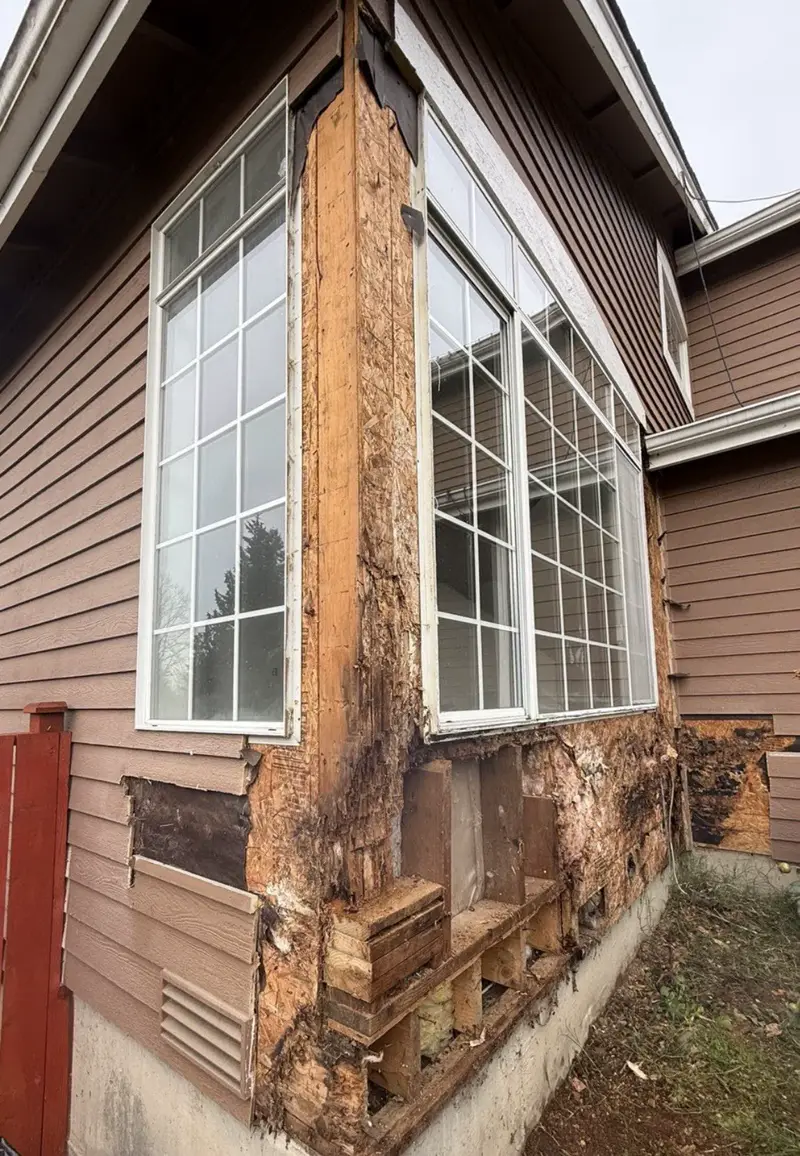 Before
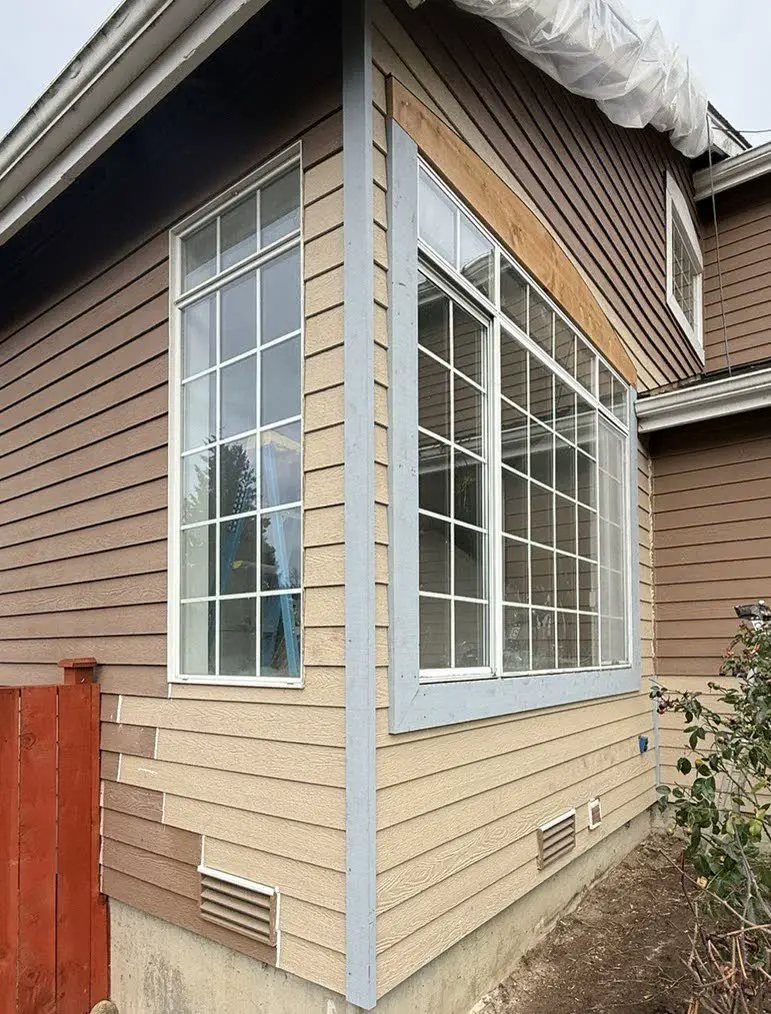 After
AfterRotted siding corner, opened up and rebuilt
What we see with dry rot repair in Mill Creek
In Mill Creek, with master-planned 1980s–2000s homes with lap siding and attached decks, dry rot usually starts where shaded greenbelts behind many lots keep back walls and decks wet, and 80s–90s builder flashing is wearing out. We find it behind siding at roof-to-wall joints, under windows and at the bottom of walls.
Mill Creek HOA homes often need repairs that match existing siding and paint exactly, which we plan for. We regularly work in Mill Creek Country Club, Town Center, Mill Creek East and Penny Creek.
Mill Creek is a master-planned city laid out around greenbelts, wetlands and a golf course, so many backyards back onto shaded, wet tree buffers. 1980s–2000s homes built in planned neighborhoods with consistent siding, trim and paint schemes, many under HOA guidelines.
Signs you need dry rot repair in Mill Creek
- Soft or spongy trim, siding or sills
- Paint that blisters or peels in the same spot
- Dark stains or swelling at roof-to-wall joints
- Musty smell or damp drywall on an exterior wall
- Siding that moves when you press on it
How we handle dry rot repair in Mill Creek
Free on-site inspection: we probe the wood, check moisture and find where the water gets in.
A written scope and price with photos, before any work starts.
We remove every damaged section and rebuild framing, sheathing and barrier as needed.
Flashing, siding, trim and paint so the repair matches and the leak does not come back.
Recent dry rot repair projects
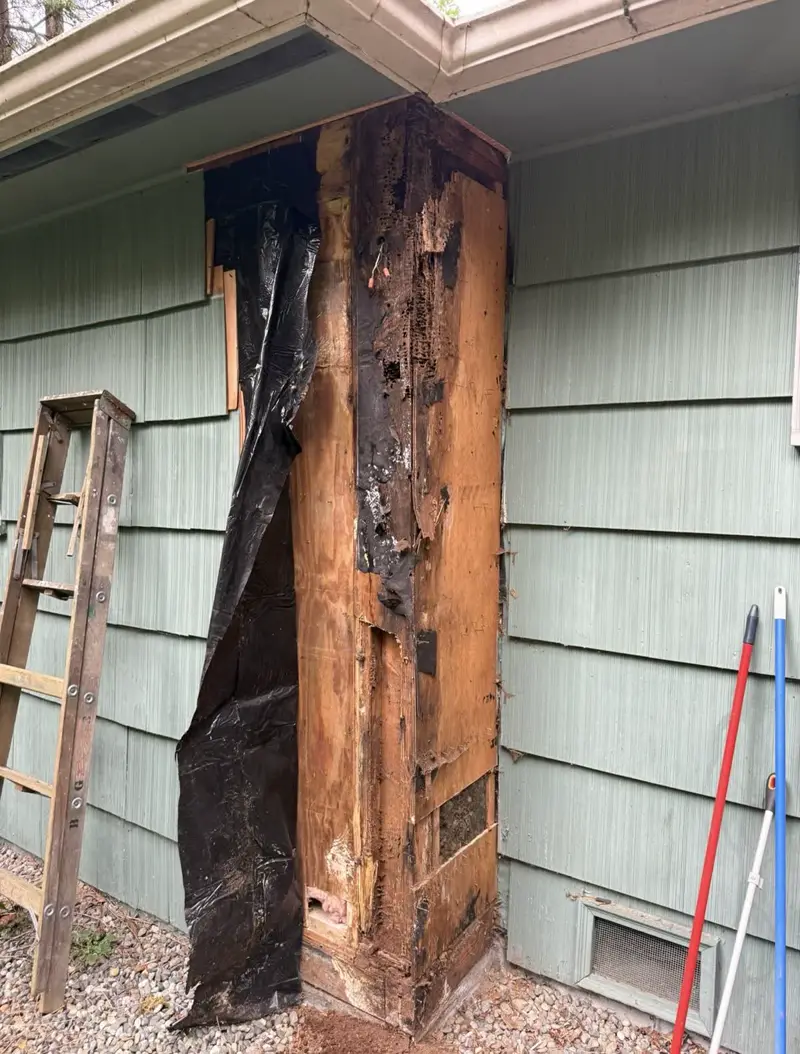
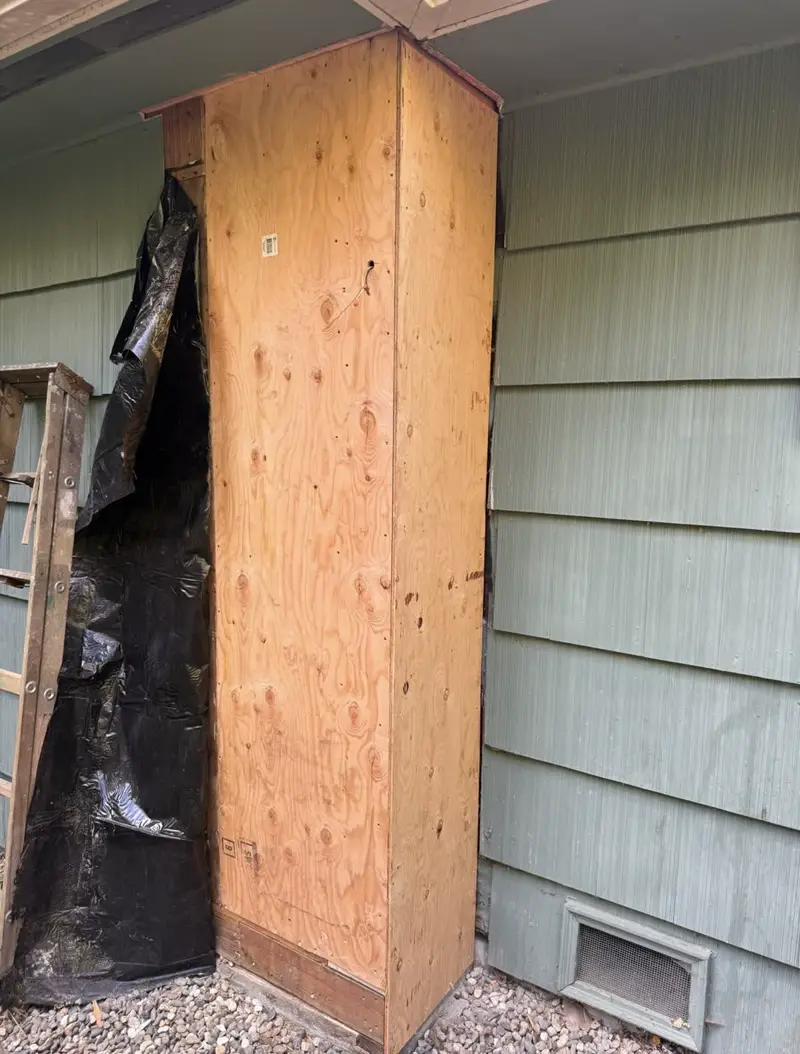
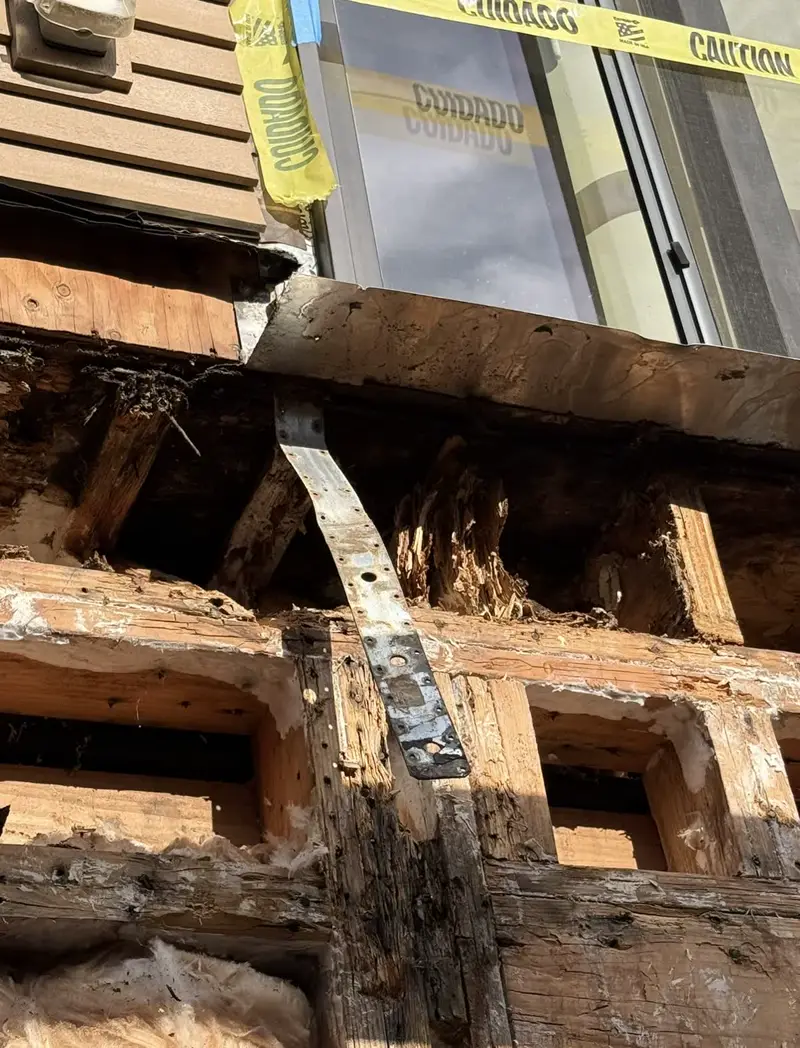
A professional repair starts by finding the moisture path
Rot is the symptom. The cause is water that gets in and cannot get out. Before we cut anything, we trace where the water enters: a roof-to-wall joint, a window corner, a deck ledger, a gutter that overflows. Replacing wood without fixing that path means the same repair comes back in a few years.
Back walls facing the greenbelts dry slowly, so rot here tends to show up on rear walls, under deck doors and at the bottom of siding.
What makes Mill Creek homes prone to rot
Mill Creek is a master-planned city laid out around greenbelts, wetlands and a golf course, so many backyards back onto shaded, wet tree buffers.
Typical homes: 1980s–2000s homes built in planned neighborhoods with consistent siding, trim and paint schemes, many under HOA guidelines.
Back walls facing the greenbelts dry slowly, so rot here tends to show up on rear walls, under deck doors and at the bottom of siding.
We regularly work near Mill Creek Town Center, the Mill Creek Country Club, North Creek Trail and Penny Creek.
Where rot hides on Mill Creek homes
Roof-to-wall joints
Where a lower roof meets a wall without kick-out flashing.
Window and door corners
Bottom corners of trim and sills, especially without sill pans.
Deck ledgers and thresholds
Where decks attach to the house and at deck door sills.
Bottom of walls
Where siding sits close to soil, mulch, patios or roofs.
Fascia and rafter tails
Behind gutters that overflow or have no drip edge.
Porch columns and posts
At the base where they sit on concrete.
Moisture damage rarely belongs to just one surface
Water that rots trim usually reaches the sheathing behind it, and water that rots sheathing often reaches the framing. That is why our dry rot repair often connects to other work:
Repair or replace: how we decide
Small, shallow decay
Minor surface decay on trim can sometimes be cut out and patched with epoxy consolidant and filler, then primed and painted.
Soft trim or siding
Replaced with new material, often PVC or fiber cement trim that will not rot again.
Soft sheathing
Cut back to solid wood and replaced with new OSB or plywood, with barrier lapped in.
Rotted framing
Replaced or sistered with new lumber, with temporary support when it carries load.
We always show you photos of what we find, so you can see why a piece is being repaired or replaced.
How to keep rot from coming back
Keep water moving
Clean gutters, extend downspouts and keep soil and mulch below the siding.
Watch shaded surfaces
North walls and walls under trees stay damp longest. Check them each fall.
Fix small failures early
Cracked caulk, peeling paint and soft trim are cheap to fix and expensive to ignore.
Dry Rot Repair in Mill Creek: what you should know
Dry rot is wood decay caused by fungi that grow when wood stays above roughly 20% moisture for long periods. In Mill Creek, the long wet season from October to May gives those fungi months to work, so a small leak at a flashing detail can turn into soft sheathing and framing within a few years. The name is misleading: the wood looks dry and crumbly once the fungus has eaten it, but it was water that started the damage.
What causes it in Mill Creek
Missing kick-out flashing
Where a lower roof edge stops at a wall, water runs straight into the siding unless a kick-out turns it into the gutter. This is the single most common source of hidden rot we open up.
Failed window and door flashing
Openings without sill pans or head flashing leak at the corners, and the framing under the window rots first.
Siding too close to grade or roofs
Wood and fiber cement wick water from soil, mulch, decks and roofing when they touch or sit too close.
Caulk instead of flashing
Vents, pipes and lights sealed only with caulk start leaking when the caulk shrinks, usually within a few years.
What our dry rot repair includes
- Probing and moisture readings to map the damage
- Photos of every damaged area before we close it up
- Removal of rotted siding, trim, sheathing and framing back to sound wood
- Replacement framing, sister studs and treated plates where needed
- New sheathing, weather barrier and flashing tied in shingle-style
- Siding and trim matched to your house, primed and painted
- Cleanup and haul-away of all debris
How to prevent it
- Keep gutters clean and downspouts extended away from the house
- Check caulk and paint at windows and trim every fall
- Keep mulch and soil at least 6 inches below the siding
- Have a contractor add kick-out flashing anywhere a roof edge meets a wall
- Repaint before the paint film fails, about every 7 to 10 years
What affects the cost in Mill Creek
Cost depends on how far the rot has spread, not on how bad the surface looks. A soft spot under one window may only need trim and a small sheathing patch; the same stain at a roof-to-wall joint can hide rotted studs and plates. We price after probing and, when needed, opening a small inspection area, so the written estimate reflects what is actually behind the siding.
How long it takes
Most single-area dry rot repairs take one to three days. Larger repairs that involve framing, shoring or multiple walls take about a week. Paint can add a day when weather allows; in winter we prime and seal, and finish paint on the next dry stretch.
Why homeowners in Mill Creek choose Goodbye Rot
We fix the cause, not just the surface. Every dry rot repair job starts with a free on-site inspection, moisture readings and photos, and you get a written scope and price before work begins. We are licensed, bonded and insured in Washington, and our repairs carry a 24-month workmanship warranty.
Dry Rot Repair in Mill Creek: common questions
How much of the wall do you open up for dry rot in Mill Creek?
Can dry rot spread to the framing?
How do I know if exterior wood is rotted?
Can I just paint over rotted wood?
Why is dry rot so common in Mill Creek?
Does dry rot repair include waterproofing?
Will homeowners insurance cover rot?
Which Mill Creek neighborhoods do you serve?
Is the estimate free in Mill Creek?
Other repairs we do in Mill Creek
Dry Rot Repair near Mill Creek
Need dry rot repair in Mill Creek? Tell us about it.
- Licensed, bonded & insured
- Free on-site estimates
- 24-month workmanship warranty
Get a free dry rot repair estimate in Mill Creek
We'll inspect the damage on-site, show you what caused it, and give you a clear written scope and price.